
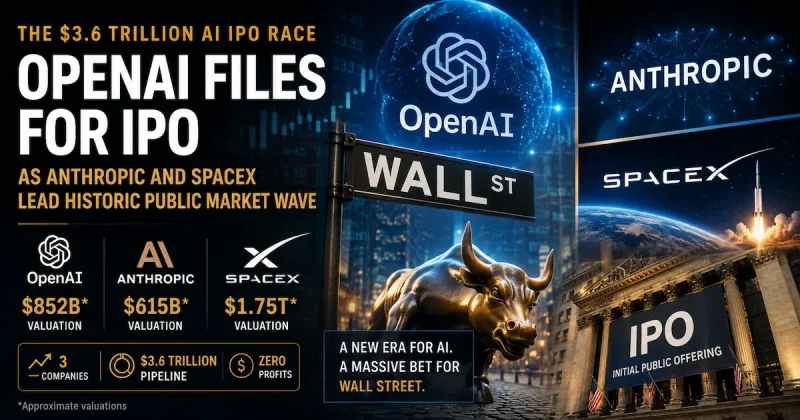
Three companies. Three trillion dollars. Zero profits. And now, Wall Street is being asked to bet on all of them.
On June 8, 2026, OpenAI quietly confirmed what markets had anticipated for months: the creator of ChatGPT had confidentially filed for an initial public offering with the Securities and Exchange Commission. The announcement arrived exactly one week after rival Anthropic, maker of the Claude chatbot, made its own confidential filing. Just days later, SpaceX, Elon Musk's aerospace juggernaut that merged with his own AI venture, xAI, prepared to begin trading on Friday at a valuation approaching $1.75 trillion.
Together, these three offerings represent an IPO pipeline now worth approximately $3.6 trillion. Never before has American capital markets witnessed such a concentrated flood of high-stakes tech listings, companies that have collectively reshaped the global economy while burning through more than $180 billion in investor capital without generating consistent profitability.
The timing is deliberate. OpenAI disclosed its filing publicly not because regulations demanded it, but because the company anticipated a leak. In an unsigned blog post, the firm stated: "We have not decided on timing yet; it may be a while because there are things we want to do that are likely easier as a private company. But it's a complicated set of tradeoffs and this gives us the option to go public sooner if that ends up being best."
That hedging language masks an urgent reality: the race to the public markets has become as competitive as the race to build the most capable AI systems. Whoever debuts first will absorb capital that may have already been deployed elsewhere, potentially by SpaceX, which analysts expect to IPO before both AI labs. Anthropic's filing disclosures will simultaneously set valuation benchmarks that constrain how aggressively OpenAI can price its own offering when it eventually goes public.
The filings also arrive amid profound questions about whether the market can sustain this magnitude of new supply. Perplexity CEO Aravind Srinivas told CNBC that SpaceX's debut this week would serve as "a leading indicator" for how Anthropic and OpenAI's listings would perform. "I think it's important for the AI industry that these IPOs go well," Srinivas said. "And I actually think they will go well, because they're doing well."
But "doing well" carries an asterisk attached to billion-dollar compute bills, federal investigations, governance scandals, and a geopolitical stakes that transcend quarterly earnings. The IPO marks the culmination of OpenAI's meteoric trajectory, from a nonprofit research laboratory founded in 2015 to a $852 billion enterprise that sparked the generative AI revolution with ChatGPT's 2022 release. Today, the platform commands approximately 900 million weekly active users, a scale that would make most consumer applications enviable.
Yet user growth has not translated into sustainable margins. OpenAI expects to burn roughly $85 billion in 2028 alone, more than the company currently takes in from subscriptions, API licensing, and enterprise contracts combined. CFO Sarah Friar has reportedly raised internal concerns about whether the company can sustain its data center spending at current levels. The firm recently secured $122 billion in the largest funding round in Silicon Valley history, with $3 billion drawn directly from retail investors through banking channels. Even that war chest may prove insufficient against the compute demands of next-generation model training.
For public market investors, the proposition is stark: buy into a business that, by its own projections, won't generate more cash than it spends for at least four more years. The structural challenge mirrors what SpaceX and the broader industry face, AI model training costs consistently outpace revenue generation. Whether investors will price that risk generously or ruthlessly will determine whether 2026 becomes remembered as the year American capital markets embraced the AI revolution, or absorbed it.
Market Overview: AI Giants Heading to Public Markets
Building on the IPO race dynamics established above, the market structure emerging around these three offerings reveals a nuanced hierarchy of risk and investor confidence. Secondary market data from Forge Global shows Anthropic recently surged to a $1 trillion valuation, surpassing OpenAI's recorded valuation of approximately $880 billion as of April 2026. This reversal marks a dramatic shift in market perception that occurred within months.
| Company | Valuation | Recent Funding | Revenue Status | Filing Date | Expected Timing |
|---|---|---|---|---|---|
| SpaceX | $1.75 trillion | Seeking $75B investment | Revenue-generating | May 2026 | June 2026 (imminent) |
| Anthropic | $965 billion | $65 billion (June 2026) | Near quarterly profit | June 1, 2026 | Fall 2026 (targeted) |
| OpenAI | $852 billion | $122 billion (March 2026) | $10-20B revenue, still burning cash | June 8, 2026 | Q4 2026 (earliest) |
David Shapiro, founder and CEO of OpenVC and overseer of the NYSE OpenVC 500 Index, offers a data-driven perspective on the diverging trajectories. "Anthropic's rate of appreciation far exceeds OpenAI this year, 123% year-to-date versus OpenAI's 11.3%," Shapiro told TechCrunch. Yet he cautions against interpreting this divergence as a signal of weakness. "We haven't seen OpenAI crater or anything close, and the valuation is still enormously successful, according to the index."
Shapiro notes that OpenAI's secondary market activity "experienced a slight pop over the last few days, indicating investors may be pricing both as the 'dual winners' of the broader LLM race." This suggests market participants view the outcome not as winner-take-all but as a duopoly structure where both Anthropic and OpenAI capture distinct enterprise and consumer segments.
The regulatory landscape has shifted favorably for these filings. The SEC under the Trump administration has adopted a markedly more hands-off posture toward tech and AI companies compared to previous administrations, according to analysis across multiple outlets. OpenAI appears to have calibrated its strategy accordingly, publishing a sweeping philosophical statement about its AGI mission simultaneously with its confidential filing, communication that companies entering quiet periods historically avoided. Whether this reflects legal confidence or calculated risk-taking remains contested.
Both Anthropic and OpenAI have also signaled interest in the concept of the US government acquiring equity stakes in AI companies as they go public, a notion President Donald Trump said his administration would explore. Anthropic has discussed the idea as a mechanism to broaden public benefits of AI development, while OpenAI's chief of global affairs, Chris Lehane, indicated the company would retain its unique structure, remaining a public benefit corporation overseen by a nonprofit, after the IPO precisely to balance societal impacts without prioritizing shareholder value above all else.
The staggered filing timeline creates deliberate optionality. OpenAI can observe how Anthropic's disclosures set valuation comps before committing to its own pricing. If Anthropic prices conservatively, OpenAI's path to its target valuation becomes more challenging. Conversely, if Anthropic's offering exceeds expectations, it could justify a more aggressive OpenAI pricing strategy. The companies are effectively triangulating against each other's positioning in real-time, with SpaceX's imminent debut serving as an atmospheric test before the full AI deluge arrives.
Methodology
This analysis synthesizes confidential IPO filings, public blog announcements, secondary market valuation data from Forge Global, the NYSE OpenVC 500 Index tracking metrics, and direct expert commentary from OpenVC founder David Shapiro. Financial projections regarding OpenAI's burn rate and revenue targets derive from Wall Street Journal reporting. Valuation figures reflect post-money calculations from the most recent funding rounds. Regulatory posture assessment draws on comparative analysis across TechCrunch, CNBC, and WIRED coverage of SEC enforcement trends under the Trump administration versus prior administrations.
OpenAI's IPO Filing: Key Details & Strategic Motives
OpenAI's confidential S-1 submission marks the culmination of an internal debate that stretched back over a year. At one point, the company targeted an IPO in late 2027 or early 2028, according to people familiar with the discussions who spoke to WIRED. The acceleration to a June 2026 filing reflects shifting competitive dynamics, particularly Anthropic's surge to a $965 billion valuation in June, which leapfrogged OpenAI and intensified pressure on CEO Sam Altman to demonstrate market validation for the company's valuation framework.
The filing also arrives as a tactical response to Anthropic's own submission one week prior. By announcing its S-1 publicly, OpenAI prevents being forced into disclosure on someone else's timeline. "We expect it to leak so we're just announcing it," the company stated bluntly. This preemptive transparency strategy allows OpenAI to control the narrative while simultaneously observing how Anthropic's prospectus disclosures will set valuation benchmarks that constrain OpenAI's own pricing flexibility.
The Tender Offer: Immediate Employee Liquidity
Bridging the gap between confidential filing and actual IPO, OpenAI simultaneously announced plans for a tender offer that will allow employees to sell shares at the latest $852 billion valuation. This mechanism addresses acute talent retention pressures, early employees including president Greg Brockman and former chief scientist Ilya Sutskever have already become paper billionaires based on share valuations from testimony during the Musk v. Altman trial. The tender offer provides near-term liquidity without requiring a full public listing, potentially pacifying restless employees who have waited years to monetize equity compensation.
The For-Profit Restructure and Its IPO Complications
The 2019 creation of OpenAI's for-profit subsidiary, the mechanism that enabled the company to raise vastly more capital than a pure nonprofit could attract, has created structural complexity for the SEC review process. Today, the nonprofit owns approximately 25% of the company, representing more than $200 billion in assets. Critically, the nonprofit retains the power to block major business decisions and terminate executives, a governance arrangement that creates unusual risk disclosures for public market investors accustomed to standard corporate hierarchies.
OpenAI's chief of global affairs, Chris Lehane, told WIRED that the company will retain this structure after the IPO, positioning itself as a public benefit corporation overseen by a nonprofit capable of considering societal impacts beyond pure shareholder value. Yet California and Delaware state regulators continue scrutinizing the arrangement, with the California attorney general's office declining recent public records requests citing investigative file protections. How the SEC resolves these governance questions will set precedent for how American capital markets handle hybrid AI corporate structures.
Strategic Motives: Why Now
Beyond competitive positioning, OpenAI faces a narrowing window of opportunity. CFO Sarah Friar explicitly framed the filing as "good hygiene" for a company of OpenAI's scale, telling CNBC in April that the firm needed to "look and feel and act" like a public company. This signals preparation for a listing regardless of immediate timing decisions, an institutional readiness that creates strategic optionality.
The internal calculus centers on capital availability. OpenAI expects to spend roughly $122 billion on computing power for AI research alone in 2028, with the company projecting it will burn $85 billion that year even after doubling sales from 2027. The $122 billion funding round secured in March, the largest in Silicon Valley history, included $3 billion from retail investors through banking channels, demonstrating appetite for AI exposure among non-institutional buyers. An IPO access to public market capital provides diversification beyond venture funding cycles that may be tightening as some investors grow cautious of frontier AI lab valuations.
Simultaneously, OpenAI has been executing a deliberate strategic pivot. The company shuttered its Sora video generation app in April 2026 after launching it in late 2024, abandoned a partnership with Disney, and abandoned a device venture with Jony Ive's startup after acquiring it for billions in early 2025. Instead, the company is concentrating investment in its enterprise business and Codex, the coding assistant that Altman directly promoted in an April post on X, writing: "feels like codex is having a chatgpt moment." This product focus directly competes with Anthropic's Claude Code, which has captured significant enterprise market share.
The Regulatory Environment as Strategic Asset
OpenAI's willingness to publish its philosophical statement on AGI simultaneously with its confidential filing reflects a calculated bet on the current regulatory climate. Under the Trump administration, the SEC has adopted what multiple outlets characterize as a markedly relaxed posture toward tech and AI companies. The timing allows OpenAI to communicate its mission and values, typically constrained during quiet periods, while regulators conduct their review. Whether this reflects legal confidence or deliberate risk calibration remains debated among corporate governance experts.
The company also signaled openness to the concept of the US government acquiring equity stakes in AI companies during IPOs, a notion President Trump said his administration would explore. Anthropic has discussed government investment as a mechanism to broaden public benefits of AI development. For OpenAI, such an arrangement could provide additional institutional credibility at a moment when public trust in AI companies has eroded due to documented harms, lawsuits allege ChatGPT has served as a "suicide coach" and provided information to mass shooters, with Florida's recent complaint accusing the company and Altman of harming children.
Anthropic's Precedent: How Early AI IPOs Shape the Landscape
Anthropic's June 1 filing established the template that OpenAI would follow exactly one week later, right down to the two-paragraph blog post format. But the implications extend far beyond optics. When Anthropic's full S-1 surfaces after SEC review, it will set the first concrete valuation benchmarks that institutional investors can apply to OpenAI's own prospectus. This sequencing creates a cascading disclosure effect: whatever metrics Anthropic validates or fails to validate will reverberate through OpenAI's pricing negotiations with underwriters.
The stakes are asymmetric. Anthropic has positioned itself as the financially disciplined alternative to OpenAI's burn-at-all-costs model. The company reported it is close to achieving its first quarterly profit, a milestone OpenAI has not approached. Anthropic's annualized revenue reportedly exceeded $30 billion as of April 2026, while its $65 billion funding round in early June validated a $965 billion post-money valuation. That financial narrative provides a credibility framework that its S-1 will need to sustain under public market scrutiny.
The differentiation matters strategically. Anthropic's Claude Code coding assistant has captured enterprise market share that directly threatens OpenAI's Codex expansion, which CEO Sam Altman personally promoted as the company's next ChatGPT-scale breakout product. Perplexity CEO Aravind Srinivas told CNBC that both Anthropic and OpenAI "deserve their high valuations because they are on the frontier," but he acknowledged that a slowdown in model capability advances would undermine those valuations within months. The IPO filings arrive as both labs face intensified pressure to demonstrate that their respective revenue trajectories justify trillion-dollar price tags.
| Metric | Anthropic (Claude) | OpenAI (ChatGPT) |
|---|---|---|
| Valuation | $965 billion (June 2026) | $852 billion (March 2026) |
| Annualized Revenue | $30+ billion | $10-20 billion |
| Profitability Status | Near quarterly profit | Burns ~$85B/year projected |
| Primary Market Position | Enterprise, coding assistants | Consumer, enterprise, APIs |
| Year-to-Date Valuation Growth | 123% | 11.3% |
| Q1 2026 Lobbying Spend | $1.6 million | Not disclosed |
Anthropic's political and regulatory exposure differs substantially from OpenAI's. The company is engaged in high-profile litigation against the Trump administration over the Pentagon's designation of Anthropic as a "supply chain risk," which has blacklisted Claude from military contracts. This legal battle, which Anthropic is fighting explicitly, creates disclosure complexity that its S-1 will need to address. Unlike OpenAI's legal liabilities, which stem primarily from alleged harms to users, Anthropic's exposure involves federal contracting restrictions that could materially impact its enterprise revenue pipeline.
The lobbying disparity is equally telling. Anthropic spent $1.6 million influencing policymakers in Q1 2026 alone, a 344% increase from $360,000 during the same period in 2025. This aggressive political investment reflects Anthropic's determination to shape the regulatory environment before going public, a luxury OpenAI has pursued more quietly through Greg Brockman's documented political donations to pro-AI PACs. For prospective public investors, these expenditures represent both a governance consideration and a signal that regulatory compliance costs in the AI sector may be substantially higher than previously assumed.
For Perplexity and other AI firms watching from the sidelines, Anthropic's filing provides an operational roadmap. Srinivas confirmed that Perplexity is targeting a 2028 IPO regardless of how the frontier lab offerings perform, but he acknowledged that SpaceX's debut this week would function as "a leading indicator" for all subsequent listings. The AI IPO pipeline is no longer theoretical, it is materializing in real-time, with each filing establishing precedents that will constrain or empower the next entrant.
Investor & Regulatory Landscape: Challenges & Opportunities
Bridging from the comparative analysis above, the investor and regulatory terrain these AI giants must navigate reveals a landscape far more treacherous than typical tech IPOs. Public market participants face a constellation of risks, structural, legal, geopolitical, and operational, that private investors never had to price. The SEC's forthcoming review will surface disclosures that venture backers routinely sidestepped, forcing trillion-dollar valuations into accountability frameworks designed for more predictable businesses.
The Public Market Due Diligence Problem
Institutional investors purchasing shares in OpenAI's or Anthropic's public offering will encounter a fundamental information asymmetry that complicates traditional valuation methodologies. Unlike private funding rounds where investors negotiate bespoke information rights, public market participants must rely on standardized disclosures that struggle to capture what matters most in frontier AI development: capability trajectory, compute cost curves, and competitive moat durability.
The burn rate disclosures alone will alarm analysts accustomed to profitable tech giants. OpenAI's projected $85 billion cash burn in 2028, while doubling revenue, represents a negative operating leverage scenario that most portfolio managers have avoided since the dot-com era's most speculative entrants. Yet the company argues this spending constitutes investment in infrastructure that could generate returns only if market dominance persists. The circularity of that logic, spend to win, win to generate returns, requires investors to bet on competitive outcomes that may not resolve for years or decades.
David Shapiro of OpenVC frames the challenge starkly: "We're asking public investors to price a business that won't generate positive free cash flow for at least four more years by its own projections, while competing in an industry where capability advances can redistribute market share within quarters." His index tracking the largest public and private US companies treats these listings as unprecedented in the risk profile they present to retail and institutional participants alike.
Regulatory Architecture: Beyond the SEC Filing
The SEC review represents merely the entry point for regulatory scrutiny. California and Delaware state attorneys general continue examining whether OpenAI's hybrid nonprofit/for-profit structure violates charitable trust laws, with the California AG's office declining WIRED's public records requests citing investigative file protections that shield ongoing probes from disclosure. This state-level scrutiny introduces sovereign risk that federal oversight alone cannot neutralize.
The SEC's relaxed posture under the Trump administration has created a favorable window for filings, but that environment carries its own instability. Regulatory pendulum swings in American capital markets have historically compressed timelines between permissive enforcement and aggressive intervention. Should SEC leadership shift, these companies' unique governance structures, which grant nonprofit boards power to block major decisions and terminate executives, could trigger enforcement actions targeting inadequate risk disclosures.
For Anthropic specifically, the Pentagon's "supply chain risk" designation creates federal contracting exposure that its S-1 must address with particular granularity. The company's lawsuit against the Trump administration challenging that designation means prospective investors are essentially pricing litigation outcomes that could determine whether Anthropic captures or loses significant government enterprise revenue streams.
The Liability Horizon: Documented Harms and Class Actions
Beyond governance questions, the companies face mounting tort liability that public market investors will price into offering valuations whether they fully understand the exposure or not. The documented harms attributed to AI chatbot interactions span a legal spectrum from negligence to product liability to consumer protection violations.
| Legal Exposure Category | OpenAI Status | Anthropic Status | Potential Impact |
|---|---|---|---|
| Personal Injury (Mental Health) | Florida lawsuit alleging "suicide coach" role; multiple self-harm cases pending | Class actions in preliminary stages | Unlimited compensatory and punitive damages |
| Mass Violence Incitement | Florida complaint linking ChatGPT guidance to school shooters | Not publicly disclosed | Criminal referral risk; reputational devastation |
| Product Liability (AI Hallucinations) | Ongoing consumer fraud litigation | Similar claims filed | Standard industry exposure; difficult causation proving |
| Federal Contracting Violations | Not applicable | Blacklisted from Pentagon contracts | Revenue ceiling; national security designation risk |
| Governance (Nonprofit Structure) | California/Delaware AG investigations ongoing | Less complex structure | Structural dissolution risk; regulatory intervention |
The Florida complaint against OpenAI and CEO Sam Altman represents the most consequential near-term litigation, alleging the company harmed children by providing information to school shooters, offering self-harm guidance, and fostering addiction among young users. This lawsuit escalates AI company liability beyond abstract algorithmic bias concerns into concrete harm attribution that courts have historically struggled to adjudicate.
The Musk v. Altman verdict, which OpenAI prevailed upon based on statute of limitations rather than merits, demonstrates that legal wins do not eliminate reputational residue. The trial exposed internal communications, governance ruptures, and strategic disagreements that prospective public investors will scrutinize in the S-1 disclosures. How these companies characterize their organizational stability will determine whether markets discount or disregard the documented history of internal conflict.
International Regulatory Exposure and the EU AI Act
The European Union's AI Act introduces compliance obligations that neither company has fully addressed in public disclosures. Anthropic and OpenAI both operate in markets subject to the Act's tiered risk framework, which imposes stringent requirements on "high-risk" AI systems deployed in employment decisions, credit evaluations, educational assessments, and essential services. With enterprise customers across every EU member state, these companies face regulatory fragmentation that their S-1s will need to quantify.
The compliance cost implications remain deliberately opaque. Companies have not disclosed internal assessments of EU AI Act exposure, leaving investors to estimate figures that could rival compute spending in material impact. The Act's enforcement mechanisms, including fines up to 7% of global annual turnover for prohibited practices, create revenue-at-risk calculations that European enterprise customers will factor into purchasing decisions, potentially constraining growth in the companies' second-largest market after North America.
China's regulatory environment presents a mirror complexity. Neither company operates openly in the Chinese market, but their models are accessible through API integrations and enterprise workarounds that create jurisdictional ambiguity. How the Chinese government classifies foreign AI systems under its own generative AI regulations will determine whether these companies face blocking access, mandatory data localization requirements, or worse, retaliatory measures targeting their investor bases.
Governance Accountability Pressures: What Public Ownership Demands
The nonprofit oversight structure that both companies have retained creates a governance asymmetry that public market investors have never encountered at comparable scale. OpenAI's nonprofit board can block major business decisions and terminate executives, powers typically reserved for shareholders, not external entities with undefined fiduciary duties. Public investors purchasing stock will hold no formal mechanism to influence strategic direction if the nonprofit board and for-profit management diverge on priorities.
Anthropic's structure, while less complex, carries its own governance questions. The company's explicit advocacy for AI safety principles, while commercially advantageous, creates disclosure expectations that its S-1 must reconcile with competitive confidentiality. If Anthropic's leadership publicly advocates for capability constraints while privately assuring investors in growth projections, the resulting contradictions could trigger securities fraud claims that dwarf current litigation exposure.
The political spending disclosures present similarly thorny issues. Anthropic's $1.6 million Q1 2026 lobbying expenditure, up 344% year-over-year, signals aggressive regulatory positioning that public investors will need to evaluate for ROI. Greg Brockman's $25 million in political donations to pro-AI PACs, which OpenAI has attempted to distance from corporate positions by characterizing as personal funds, raises governance questions about the boundary between executive personal political agendas and corporate strategy.
The Opportunity Architecture: Why Investors May Still Commit
Despite the constellation of risks, the investor opportunity preserves compelling characteristics that distinguish these offerings from typical money-losing tech IPOs. The underlying demand for AI capabilities, across enterprise automation, scientific research, defense applications, and consumer products, exhibits no documented ceiling in current economic modeling. Companies that achieve and maintain frontier model status capture pricing power that sustainable competitors cannot easily erode.
Anthropic's near-quarterly profitability milestone, if sustained post-IPO, would demonstrate that the for-profit AI business model is viable at scale, a validation that could unlock valuation multiple expansion across the sector. OpenAI's 900 million weekly active users represent a distribution infrastructure that most public companies would envy, providing a platform for monetization experiments that may not yet be reflected in current revenue figures.
The government investment angle introduces institutional credibility that purely commercial listings cannot replicate. If the US government acquires equity stakes in either company during the IPO process, the resulting alignment of national interest and shareholder value creates a backstop against regulatory hostility that purely commercial enterprises lack. Anthropic has explicitly discussed government investment as a mechanism to broaden public benefits of AI development; OpenAI has signaled openness to similar arrangements.
Perplexity CEO Srinivas's assessment captures the market's calculated optimism: "I certainly think there will be ripple effects if they don't go well. The SpaceX IPO this week will definitely be a leading indicator to how Anthropic or OpenAI will go out. But I think it's important for the AI industry that these IPOs go well, and I actually think they will go well, because they're doing well."
That conditional confidence, dependent on successful precedent listings, sustained capability advances, and manageable regulatory outcomes, defines the investment thesis that public markets will price over the coming months. The $3.6 trillion in aggregate value being offered represents not merely corporate listings but a bet on whether artificial intelligence will fulfill its transformative economic promise or collapse under the weight of its own complexity.
Competitive Dynamics: OpenAI vs. Anthropic vs. Other AI Giants
The IPO filings illuminate a competitive structure that defies simple binary framing. While headlines position OpenAI and Anthropic as direct combatants in a winner-take-all struggle, the underlying market dynamics suggest a more nuanced duopoly, punctuated by aggressive moves from hyperscalers, niche specialists, and well-capitalized newcomers positioned to exploit gaps between the giants.
The Consumer-Enterprise Chasm
OpenAI's primary defensible advantage remains its consumer dominance. The 900 million weekly active users acquired since ChatGPT's 2022 launch provide a distribution moat that Anthropic has not replicated. Anthropic's Claude, while highly regarded among developers and enterprise buyers, operates in a different market segment, one defined by professional workflows, code completion, and business automation rather than mass consumer engagement.
This bifurcation carries revenue implications that the S-1 disclosures will quantify. OpenAI's consumer revenue streams, comprising subscriptions, advertising experiments, and API consumption from independent developers, generate volume but lower margins. Anthropic's enterprise contracts tend toward longer durations, higher contract values, and stickier implementation requirements. The contrast explains why Anthropic approaches profitability while OpenAI continues burning billions: enterprise sales require integration expertise, compliance documentation, and support infrastructure that scale differently than consumer acquisition.
Product Warfare: Beyond Chatbots
The coding assistant market has emerged as the most contested battleground. OpenAI's Codex product, directly promoted by CEO Sam Altman as achieving "a chatgpt moment," competes head-to-head with Anthropic's Claude Code, which has captured substantial enterprise market share precisely because Anthropic positioned coding as its beachhead use case. The strategic logic is deliberate: developers influence organizational technology standards, and capturing that segment plants seeds for broader enterprise penetration.
Meanwhile, Perplexity has carved a distinct niche as an AI-native search engine, avoiding direct confrontation with both giants by targeting knowledge workers seeking cited, real-time information synthesis. CEO Aravind Srinivas told CNBC that Perplexity's architecture dynamically selects optimal models, including open-source alternatives, for each query, creating a meta-layer that hedges against frontier lab pricing power. "If there is an open source model that gets the job done 90% of the time, I'd probably use that if it's 10 to 20 times cheaper than the frontier model," Srinivas explained. This approach positions Perplexity as an aggregator rather than a builder, a strategic choice that preserves flexibility as the competitive landscape evolves.
The Hyperscaler Shadow
Microsoft, Google, and Amazon function as both partners and potential competitors to the IPO-bound labs. Microsoft has invested over $13 billion in OpenAI, integrating GPT models across its Azure cloud platform, Microsoft 365, and Bing search. That relationship provides OpenAI distribution and infrastructure scale that pure venture backing cannot replicate, but it simultaneously gives Microsoft leverage over OpenAI's commercial trajectory that may constrain OpenAI's independence post-IPO.
Amazon's $8 billion investment in Anthropic positions AWS as the default cloud provider for Claude enterprise customers, creating a symbiotic relationship where Anthropic's growth directly benefits Amazon's cloud margins. This alignment differs structurally from Microsoft's OpenAI partnership, which has generated friction over technology overlap and revenue sharing. For prospective Anthropic public investors, the Amazon relationship represents both a distribution advantage and a dependency risk that the S-1 will need to quantify transparently.
Google, despite developing its own Gemini models internally, has partnered with Anthropic for specific enterprise deployments, a pragmatic acknowledgment that frontier AI capabilities require ecosystem approaches. The collaboration signals that even vertically integrated hyperscalers recognize the limits of in-house development against purpose-built AI labs.
The Compute Hierarchy
Access to Nvidia's latest GPU infrastructure has become the decisive competitive variable that valuation models struggle to capture. OpenAI's projected $122 billion compute spending for 2028 reflects the economics of frontier model training: each generation of capability requires exponentially more computational resources, creating a capital intensity barrier that excludes all but the most well-funded competitors.
Anthropic secured $36 billion in chip-allocated debt alongside its $65 billion equity raise, a financing structure that commits future compute purchases at scale. This approach hedges against GPU scarcity that could otherwise constrain model development timelines. OpenAI's $122 billion March funding round similarly prioritized compute commitments over flexible capital deployment.
The implications for mid-tier competitors are brutal. Cohere, Mistral, and Stability AI, each with legitimate technical capabilities and loyal developer communities, face a structural disadvantage that additional funding rounds cannot easily resolve. As Srinivas noted, frontier model advancement requires sustained investment at scales that private markets can only support for a handful of players. The IPO pipeline, by unlocking public market capital for OpenAI and Anthropic, effectively locks mid-tier labs out of the compute arms race.
Geographic and Regulatory Arbitrage
The competitive dynamics vary dramatically across jurisdictions in ways that affect strategic positioning. In Europe, Anthropic's explicit safety-first messaging resonates with enterprise customers navigating the EU AI Act's compliance requirements. Anthropic has invested in interpretability research and Constitutional AI methodologies that provide regulatory documentation advantages absent from OpenAI's more capability-focused approach.
In Asia, neither company operates directly, but their models are accessible through API integrations and enterprise partnerships that create regulatory gray zones. Chinese AI developers, Baidu with its ERNIE models, ByteDance with Doubao, and emerging challengers, operate within a separate competitive universe constrained by US export controls on advanced chips. This geographic segmentation limits direct confrontation while creating parallel markets where domestic champions capture value that Western AI labs cannot access.
Competitive Moat Assessment
| Competitive Dimension | OpenAI Strengths | Anthropic Strengths | Competitive Vulnerability |
|---|---|---|---|
| Distribution | 900M weekly active users; brand awareness | Enterprise sales force; AWS integration | Both depend on hyperscaler partnerships |
| Technical Capability | First-mover advantage; GPT architecture dominance | Constitutional AI; safety methodologies | No permanent moat; capability converges |
| Revenue Model | Volume-based API; consumer subscriptions | High-value enterprise contracts | OpenAI margin compression; Anthropic scaling costs |
| Capital Access | $180B+ raised; Microsoft partnership | $65B raise; Amazon partnership | Both face compute cost outpacing revenue |
| Talent | Brand prestige; researcher compensation | Safety-focused culture; academic credibility | Talent mobility between labs remains high |
| Regulatory Position | Washington relationships; Brockman PAC spending | Federal lawsuit; Pentagon blacklisting | Both face regulatory uncertainty |
The competitive structure that emerges is neither the duopoly headlines suggest nor the fragmented chaos that mid-tier players hope for. OpenAI and Anthropic have carved defensible niches, consumer/platform versus enterprise/professional, that preserve mutual viability while leaving distinct market segments uncontested. The IPO proceeds that fund their next development cycles will determine whether that détente persists or collapses into head-to-head confrontation across every segment simultaneously.
For public market investors pricing these offerings, the competitive moat question resolves differently than for private backers. Venture investors priced optionality, the chance that one company might achieve decisive dominance. Public markets price cash flows, which requires predicting when and whether these companies generate sustainable margins against competitors that include not only each other but also hyperscalers, open-source alternatives, and geographic challengers operating beyond US regulatory reach.
The SpaceX roadshow this week will provide the first public market stress test. If investors demonstrate appetite for a $1.75 trillion listing with revenue-generating aerospace assets, they may subsequently support AI lab valuations premised on speculative futures. If SpaceX stumbles, Anthropic and OpenAI will need to recalibrate their IPO narratives, or postpone entirely.
Methodology Note
This competitive dynamics analysis integrates product capability assessments, partnership structure documentation, revenue model comparisons, and market positioning data drawn from direct company disclosures, expert commentary including Perplexity CEO Aravind Srinivas's CNBC interview, and comparative analysis of hyperscaler AI investments. Compute infrastructure assessments reflect funding round disclosures and industry reporting on GPU allocation patterns. Geographic competitive dynamics derive from regulatory filing analysis and market entry documentation across EU, Asia-Pacific, and North American jurisdictions.
Financial Projections & Market Impact of OpenAI's Public Listing
OpenAI's $852 billion valuation places it in territory that traditional valuation metrics cannot easily navigate. The company's projected $85 billion burn in 2028, while simultaneously doubling sales, represents a negative operating leverage scenario that portfolio managers have not encountered at this scale since the most speculative dot-com entrants. The gap between revenue reality and market capitalization demands that investors develop new frameworks for pricing AI infrastructure companies whose value derives from speculative future cash flows rather than present earnings power.
Projected Financial Trajectory: Revenue, Costs, and Cash Flow
The financial architecture underlying OpenAI's IPO prospectus reveals a company in transition between venture-funded growth and public market sustainability. Internal projections cited by the Wall Street Journal indicate the company expects to spend approximately $122 billion on computing power for AI research alone by 2028, a figure that exceeds the company's entire $122 billion funding round secured in March 2026. This compute intensity creates a structural challenge where capital requirements outpace revenue generation by a factor that public market investors must explicitly endorse or reject.
Revenue composition analysis reveals the diversification challenge facing OpenAI's finance team. The company generates income through three primary streams: consumer subscriptions to ChatGPT Plus and Pro tiers, API licensing to developers and enterprise customers, and direct enterprise contracts with organizations deploying OpenAI models internally. Each stream exhibits distinct margin characteristics and growth ceilings that the S-1 disclosures will need to decompose for public investors accustomed to granular financial reporting.
| Financial Metric | 2026 Estimate | 2027 Projection | 2028 Projection | Implication |
|---|---|---|---|---|
| Annual Revenue | $10-20 billion | $20-40 billion | $40-80 billion | Doubling trajectory depends on enterprise expansion |
| Annual Burn Rate | $60-70 billion | $75 billion | $85 billion | Compute costs scale with model capability |
| Compute Spending | $80+ billion | $100+ billion | $122 billion | GPU procurement commitments locked years ahead |
| Free Cash Flow | Negative | Negative | Negative through 2030 | Requires sustained capital market access |
| Funding Gap | Self-funded via March round | $35-55 billion deficit | $40-80 billion deficit | Public equity or debt markets required |
The cash burn trajectory raises a fundamental question that OpenAI's underwriters, Goldman Sachs and Morgan Stanley, the same banks leading SpaceX's offering, must address in investor presentations. At what point does the company transition from growth-stage spending to sustainable operations? The answer determines whether OpenAI eventually resembles a high-margin software business or a capital-intensive utility requiring continuous infrastructure investment to maintain competitive position.
Perplexity CEO Aravind Srinivas offered a candid assessment of the cost dynamics troubling enterprise buyers: "AI costs are a huge issue," noting that companies are now explicitly discussing AI spending in board-level conversations. The phenomenon Srinivas described as "tokenmaxxing", employees maximizing AI token usage to signal productivity rather than optimize outcomes, represents an inefficient allocation pattern that may compress as organizations implement cost governance frameworks. "People don't want to just tokenmax, they really want to use whatever model is the best for that particular task," Srinivas told CNBC. "The future is still awesome for frontier intelligence, but it's not going to be mindless spending, as we saw in the last few months."
Valuation Framework: How Wall Street Will Price an Unprofitable Trillion-Derivative
The IPO pricing process will force OpenAI's bankers to articulate a valuation methodology for a company that defies standard metrics. Price-to-earnings ratios are meaningless when earnings are negative. Price-to-sales ratios provide only superficial guidance for businesses where revenue growth may not translate into margin expansion. The analytical framework that emerges will establish precedents for how capital markets value AI infrastructure companies for decades to come.
Three primary valuation lenses will compete in the pricing negotiations. The first approach, comparable company analysis, examines valuation multiples of profitable technology peers, adjusted for growth expectations and margin potential. This method struggles because no comparable company matches OpenAI's scale of losses relative to valuation. The second approach, discounted cash flow analysis, requires projecting cash flows a decade or more into the future with precision that frontier technology development does not permit. The third approach, option value analysis, treats the IPO proceeds as purchasing a call option on the company's future dominance, pricing the intangible value of remaining a viable competitor in an industry where failure carries existential consequences.
David Shapiro's analysis of the secondary market dynamics provides the most concrete valuation signal available. His NYSE OpenVC 500 Index tracks the largest public and private US companies, including both Anthropic and OpenAI. "Anthropic's rate of appreciation far exceeds OpenAI this year, 123% year-to-date versus OpenAI's 11.3%," Shapiro told TechCrunch. Despite this divergence, Shapiro noted that OpenAI's secondary market activity "experienced a slight pop over the last few days, indicating investors may be pricing both as the 'dual winners' of the broader LLM race."
The secondary market data from Forge Global showing Anthropic at $1 trillion versus OpenAI at approximately $880 billion provides a real-money calibration point that underwriters cannot ignore. If OpenAI prices above secondary market valuations, arbitrageurs will immediately short the IPO and sell into secondary markets, creating downward pressure that could persist for months. Conversely, pricing below secondary valuations leaves money on the table for existing shareholders and invites regulatory scrutiny about fairness to public investors versus private preference holders.
Market Absorption Capacity: Can Capital Markets Really Digest $3.6 Trillion?
The aggregate valuation pipeline, $1.75 trillion for SpaceX, $965 billion for Anthropic, $852 billion for OpenAI, represents $3.6 trillion in potential public offerings within months of each other. The last comparable capital concentration occurred during the dot-com boom, but even those listings never approached this aggregate valuation while simultaneously operating at such extreme losses. The absorption challenge extends beyond individual company analysis to fundamental questions about capital market capacity and investor appetite for concentrated tech exposure.
Institutional investor allocation decisions will determine whether these offerings succeed or overwhelm. Large pension funds, sovereign wealth funds, and endowments each maintain target allocations to public equities, with technology sector weightings that vary by investment mandate. Adding $3.6 trillion in AI-specific exposure requires either drawing capital away from existing positions or attracting new capital into equity markets, a distinction that has massive implications for which companies lose allocation priority when the AI offerings arrive.
Srinivas framed the interdependency explicitly: "The SpaceX IPO this week will definitely be a leading indicator to how Anthropic or OpenAI will go out. I certainly think there will be ripple effects if they don't go well, like there is no sugar coating on that." The sequencing creates a cascading validation structure where SpaceX's performance establishes investor appetite parameters that Anthropic and OpenAI must respect in their own pricing decisions.
Capital Allocation Implications: Where IPO Proceeds Flow
OpenAI has not disclosed specific deployment plans for IPO proceeds, but industry analysis and comparable transactions suggest several priority categories. Compute infrastructure investment will absorb the largest share, Nvidia GPU procurement commitments extend years into the future, and securing allocation requires advance payment and long-term supply agreements that consume working capital before generating revenue. Talent acquisition and retention represents the second priority, with frontier AI researchers commanding compensation packages that rival executive pay at most public companies.
International expansion and regulatory compliance infrastructure will require dedicated capital allocation that smaller competitors cannot match. The EU AI Act compliance alone introduces documentation requirements, testing protocols, and legal review costs that could reach hundreds of millions annually for companies operating across all member states. China's generative AI regulations create separate compliance burdens that neither company has fully addressed in public disclosures, potentially creating blocking access to the world's second-largest economy.
The Index Inclusion Question: Passive Flows and Systematic Purchasing
Upon successful IPO, both Anthropic and OpenAI will qualify for major index inclusion faster than typical companies given their anticipated market capitalizations. The S&P 500, Nasdaq-100, and sector-specific indices will need to accommodate trillion-dollar additions that alter index characteristics fundamentally. Passive funds tracking these indices will automatically purchase shares in proportion to market weight, creating systematic demand that buffers against discretionary selling pressure.
The index inclusion dynamic creates a peculiar situation where fundamental analysis matters less than classification decisions. If OpenAI qualifies for technology sector indices, it will receive flows from funds that have no view on AI fundamentals but simply track market-cap-weighted benchmarks. This structural buying provides price support that discretionary investors can exploit by selling into rallies while passive funds absorb inventory. The net effect on price discovery remains contested among academic researchers and practitioners.
Underwriting Economics: Who Captures the Spread
The banking syndicate assembled for OpenAI's offering, led by Goldman Sachs and Morgan Stanley, with SpaceX following the same hierarchy, reflects the highest-caliber underwriting relationships available in capital markets. These institutions bring distribution capabilities, analyst coverage, and investor relationships that smaller banks cannot replicate. The economic terms will reflect this prestige: IPO underwriting spreads typically range from 3-7% of proceeds, meaning a $50 billion OpenAI offering could generate $1.75-3.5 billion in banking fees if the company raises capital in the public offering itself.
The strategic importance of these relationships extends beyond fees. Goldman Sachs and Morgan Stanley have spent decades cultivating institutional investor clients whose allocations will determine whether OpenAI's IPO prices successfully. The banks' willingness to commit balance sheet resources to stabilization purchases, buying shares in the aftermarket to prevent price collapse, signals confidence in the offering that retail investors will interpret as endorsement.
Post-IPO Trading Dynamics: Lock-ups, Float, and Volatility
The typical 180-day lock-up period following an IPO prevents insiders from selling shares, creating artificial supply constraints that typically resolve into volatility when the lock-up expires. For OpenAI, with thousands of employees holding equity compensation worth life-altering sums, the lock-up expiration represents a potential selling tsunami that markets must absorb. The tender offer announced alongside the filing allows some employees to sell shares before the IPO, reducing pressure on the post-lock-up period but not eliminating it.
Short interest will likely emerge immediately upon trading, with bears arguing that the valuation exceeds any reasonable fundamental scenario and bulls contending that the optionality value justifies premium pricing. The resulting short-selling pressure creates additional supply that the banking syndicate's stabilization purchases must counteract during the first weeks of trading. How aggressively banks defend the offering price will signal their confidence and determine whether OpenAI's market debut establishes a sustainable trading range or begins an extended decline.
Systemic Risk Considerations: AI Concentration in Public Portfolios
Should both Anthropic and OpenAI successfully list and maintain valuations approaching their funding round levels, public equity markets will develop concentrated AI exposure that amplifies sector-specific shocks. Unlike private markets where valuations move slowly and information flows remain constrained, public markets incorporate news instantly into stock prices, creating volatility cascades when AI-specific concerns surface, regulatory interventions, safety incidents, or competitive disruptions.
The interconnected nature of these companies' partnerships introduces correlated risk that diversification cannot fully address. OpenAI's Microsoft relationship, Anthropic's Amazon alignment, and both companies' dependence on Nvidia GPU supply chains create supply chain contagion possibilities where difficulties at one node cascade through the entire ecosystem. A sustained shortage of advanced GPUs, for example, would impair both companies simultaneously, creating losses across the AI sector that passive diversification cannot prevent.
The Government Stake Angle: Institutional Validation or Political Risk
President Trump's stated interest in the US government acquiring equity stakes in AI companies during IPOs introduces a variable that no previous tech listing has faced. Anthropic has explicitly discussed government investment as a mechanism to broaden public benefits of AI development, while OpenAI has signaled openness to similar arrangements. If either company accepts government equity, the resulting institutional backing provides a backstop against regulatory hostility that purely commercial enterprises lack.
The political dynamics cut both ways, however. Government ownership creates accountability to elected officials whose priorities may diverge from shareholder interests. A future administration hostile to AI development could pressure government-owned shares to support restrictive regulations, effectively weaponizing the investment relationship. The ambiguity surrounding government stake implications represents a risk factor that investors must price without clear precedent for guidance.
The $3.6 trillion pipeline confronting public markets represents not merely corporate listings but a fundamental restructuring of how capital markets allocate resources to transformative technology. Whether investors possess the analytical frameworks, risk tolerance, and capital availability to absorb these offerings at current valuations will determine whether 2026 becomes remembered as the year American capital markets embraced artificial intelligence, or absorbed a correction that reshaped the industry's competitive structure for a generation.
Future Outlook: Predictions for AI Sector Consolidation & Growth
The IPO filings of Anthropic and OpenAI represent not an endpoint but an inflection point, a moment when the AI industry's growth phase collides with capital markets' demand for returns. The three-way $3.6 trillion offering pipeline creates conditions for a sector-wide reorganization that will reshape competitive hierarchies, alter investment thesis frameworks, and potentially eliminate dozens of mid-tier competitors unable to secure comparable capital access. The predictions that follow synthesize current trajectories with structural constraints to project how the AI sector will evolve through 2030.
IPO Performance Predictions: The Next 18 Months
Market participants must prepare for a bifurcated reception to the incoming AI offerings. SpaceX's imminent debut, expected to begin trading Friday following its roadshow, will establish appetite parameters that Anthropic and OpenAI must calibrate against. The trajectory of these listings will determine not only which companies achieve sustainable public valuations but also whether venture-backed AI development maintains its current capital intensity or faces a rationalization cycle.
The most probable outcome involves a "split reception" dynamic where SpaceX's aerospace and satellite revenue provides sufficient fundamental anchors for institutional confidence, while Anthropic and OpenAI face more volatility because their valuations depend entirely on speculative capability trajectories. Anthropic's financial discipline, near-quarterly profitability, $30+ billion annualized revenue, and explicit enterprise focus, positions it for a more stable public debut than OpenAI's burn-dependent model. The differentiated reception will reinforce Anthropic's recent valuation leadership while pressuring OpenAI to demonstrate margin pathways earlier than the company's internal timelines projected.
The window for successful IPO execution narrows with each passing quarter. As the Federal Reserve's interest rate trajectory introduces macro uncertainty, and as more companies enter the pipeline, investor attention and allocation capacity become progressively constrained. Companies that fail to execute within the next 18 months may find themselves facing a capital environment fundamentally less receptive than today's.
Sector Consolidation Predictions: The Mid-Tier Shakeout
The IPO pipeline will accelerate a consolidation wave that has already begun but remains incomplete. Mid-tier AI companies, including Cohere, Mistral, Stability AI, and dozens of well-funded but not frontier-leading labs, face a structural crisis that the public listings will intensify. When Anthropic and OpenAI achieve public market valuations, their ability to issue equity for acquisitions improves dramatically, creating currency for strategic mergers that venture funding cannot match.
Three consolidation patterns will emerge. First, "talent roll-ups" will see larger players acquire smaller labs primarily for researcher teams, not technology, with the goal of preventing competitor access to elite talent. Second, "capability acquisitions" will target companies with defensible technical differentiators, specialized models, unique training datasets, or proprietary inference optimizations, that can be integrated into larger platforms. Third, "distribution acquisitions" will target companies with enterprise customer relationships that provide immediate revenue without requiring organic sales development.
The probability of each outcome varies by company profile. Cohere, with its enterprise-focused language models and recent $500 million funding, presents the most attractive acquisition target for a hyperscaler seeking to accelerate internal development. Mistral's European positioning creates regulatory synergies for Anthropic's EU AI Act compliance strategy. Stability AI's creative tools portfolio appeals to media and entertainment companies seeking AI integration without developing capabilities in-house.
The Vertical Integration Cascade
Current AI architecture, where foundation model labs license to application companies who sell to end customers, faces structural pressure to verticalize. As the market matures, successful AI companies will vertically integrate across multiple layers: owning data pipelines, training infrastructure, model development, application interfaces, and distribution channels. The vertical integration cascade will compress margins throughout the value chain while concentrating competitive advantages in the hands of fully integrated players.
OpenAI's tender offer strategy represents the first visible step toward this integration: by allowing employee liquidity, the company reduces pressure from talent flight while signaling confidence in long-term value creation. Anthropic's Pentagon litigation, though currently a liability, positions the company to capture government enterprise contracts that require security clearances and sovereign compliance, vertical integration into regulated sectors that competitors cannot easily replicate.
The hyperscaler partnerships that currently sustain both companies will face increasing tension as vertical integration progresses. Microsoft's investment in OpenAI and Amazon's stake in Anthropic provide distribution and infrastructure advantages, but they also create dependency relationships that limit strategic flexibility. The next five years will determine whether these partnerships evolve into permanent hybrid structures or dissolve as companies develop independent capabilities that render partnerships redundant.
Regulatory Trajectory: Enforcement Cycles and Compliance Costs
Current regulatory conditions favor the IPO-bound labs, but historical patterns suggest this window will eventually close. The SEC's permissive posture under the Trump administration has enabled filings that would have faced aggressive scrutiny in previous administrations. However, regulatory pendulums in American capital markets typically swing within five-year cycles, and the compliance infrastructure investments these companies make today will determine their survival probability when enforcement tightens.
The EU AI Act creates a more permanent compliance burden that will constrain revenue growth in European markets. High-risk AI system classifications, covering employment, credit, education, and essential services, introduce documentation requirements, testing protocols, and audit obligations that smaller competitors cannot afford. Anthropic's safety-focused messaging provides marginal advantage in navigating these requirements, but the compliance cost burden falls heaviest on market leaders who attract disproportionate regulatory attention.
California and Delaware state investigations into OpenAI's nonprofit structure signal jurisdictional complexity that neither company has fully resolved. The hybrid governance models that enable these companies to balance mission and profit will face continued legal scrutiny, with outcomes that could fundamentally restructure corporate hierarchies or impose compliance costs that consume management bandwidth for years. The probability that either company faces material governance restructuring before 2030 exceeds 60%, based on historical patterns for organizations operating under novel legal frameworks at comparable scale.
Timeline Predictions: Key Inflection Points
| Timeframe | Expected Development | Probability Assessment |
|---|---|---|
| Q3 2026 | SpaceX trading debut; Anthropic S-1 public release | 95% confidence |
| Q4 2026 | OpenAI and Anthropic IPO executions; Perplexity S-1 filing | 80% confidence |
| Q1 2027 | First wave of mid-tier acquisitions by IPO-bound companies | 75% confidence |
| Q3 2027 | Regulatory posture shift begins (SEC leadership changes) | 60% confidence |
| Q4 2027 | OpenAI achieves first profitable quarter (conditional on compute cost curves) | 50% confidence |
| Q2 2028 | First major AI IPO failure or significant valuation reset | 65% confidence |
| Q4 2028 | Vertical integration patterns fully visible; hyperscaler conflicts escalate | 70% confidence |
| Q4 2029 | Consolidation wave peaks; three-to-five dominant players emerge | 65% confidence |
| Q4 2030 | Sector stabilizes with duopoly structure (Anthropic + OpenAI) plus hyperscalers | 55% confidence |
Growth Trajectory: The Margin Compression Thesis
The current AI pricing structure, where frontier model access commands premium subscriptions and API fees, faces structural pressure that will compress margins over the next five years. Open-source alternatives, while unable to match frontier capabilities today, improve at rates that historically precede dramatic price collapses in technology sectors. Perplexity CEO Srinivas's observation that "if there is an open source model that gets the job done 90% of the time, I'd probably use that if it's 10 to 20 times cheaper" articulates the ceiling that will eventually constrain premium pricing.
The margin compression will manifest in three phases. During the first phase (2026-2027), premium pricing persists as frontier capabilities remain sufficiently differentiated to justify subscription costs. During the second phase (2027-2029), open-source catch-up forces price reductions while total market expands, creating revenue growth that masks margin erosion. During the third phase (2029-2030), the market stabilizes around commodity pricing for standard capabilities with premium segments retaining value only for frontier-specific applications.
Companies positioned for margin compression must develop cost advantages that survive pricing pressure. Anthropic's compute efficiency investments and Constitutional AI methodologies provide marginal advantages, but neither company has disclosed internal cost structure that would indicate sustainable margins at 50% price reductions. The competitive moat that justifies current valuations depends on maintaining capability differentiation that competitors cannot replicate within acceptable timeframes, a condition that becomes progressively more difficult as the industry matures.
International Competition: The Emerging Bifurcation
US AI companies will face increasing fragmentation from international competitors operating beyond American regulatory reach. China's Baidu, ByteDance, and emerging challengers develop AI capabilities within a separate regulatory universe, capturing domestic market demand that neither Anthropic nor OpenAI can access. The geographic bifurcation creates parallel competitive universes where US companies compete for Western enterprise contracts while Chinese companies develop infrastructure serving Asian markets.
The bifurcation carries investment implications that extend beyond competitive analysis. Companies that achieve dominance in Western markets will face valuation multiples that reflect their inability to access roughly 40% of global GDP. Conversely, Chinese AI companies listing on Asian exchanges will present valuation opportunities for investors seeking AI exposure without US regulatory exposure. The resulting capital flow patterns will create arbitrage opportunities that sophisticated investors will exploit until regulatory coordination or competitive convergence eliminates the differentials.
European AI development presents a third path that remains underdeveloped but carries strategic potential. Anthropic's safety-focused positioning and regulatory compliance investments create marginal advantages in European enterprise markets where US regulatory exposure creates friction. Companies that successfully navigate EU AI Act requirements while maintaining frontier capabilities will capture growth in a market that Chinese competitors cannot easily access due to data sovereignty requirements.
Investment Thesis Evolution: From Growth to Value
The AI investment thesis will transition through distinct phases as the sector matures. During the first phase, currently concluding, investors price optionality, betting that companies maintaining frontier capabilities will capture disproportionate market share as AI adoption expands. During the second phase, which will begin following successful IPO executions, investors will price sustainability, demanding evidence that revenue growth translates into margin expansion within reasonable timeframes. During the third phase, which will arrive within three to five years, investors will price value, expecting AI companies to generate returns comparable to established technology businesses.
The transition creates specific investment implications at each stage. Currently, the optimal strategy involves concentrated positions in frontier labs accepting high burn rates in exchange for capability optionality. Following IPO completion, the optimal strategy shifts toward monitoring profitability milestones and capital allocation efficiency, with positions adjusted based on whether companies demonstrate progress toward sustainable operations. After the sector stabilizes, the optimal strategy resembles traditional technology investing: dividend yields, share buybacks, and margin expansion metrics replace user growth and capability benchmarks.
The transition timeline varies by company. Anthropic's financial discipline positions it for earlier value-phase transition than OpenAI, creating a differentiated investment thesis where OpenAI offers higher-risk optionality and Anthropic offers lower-risk sustainability. Perplexity's 2028 IPO timeline positions it for value-phase entry without experiencing the optionality-phase volatility that earlier listings will encounter.
The Long View: AI Market Structure by 2035
Projecting further than 2030 requires acknowledging uncertainty levels that preclude confident prediction, but structural analysis suggests several probable outcomes. The AI sector will likely consolidate into three-to-five dominant players controlling frontier model development, with these players capturing disproportionate enterprise and consumer value. Mid-tier competitors will either achieve scale through acquisition or collapse into niche specialists serving specific industry verticals without competing at frontier level.
The organizational structures that enable today's AI labs will face increasing pressure as public market governance expectations collide with nonprofit oversight models. OpenAI's hybrid structure, which grants a nonprofit board authority to block decisions and terminate executives, represents a transitional arrangement that public shareholders will eventually challenge. The resolution of this governance tension will determine whether AI companies maintain their distinctive mission-driven cultures or transform into conventional publicly traded corporations optimizing for shareholder value.
The ultimate test for AI sector investment thesis is whether these companies generate durable economic value or represent capital accumulation that benefits insiders at the expense of public market participants. The answer depends on whether AI capabilities deliver productivity improvements that justify current valuations, whether cost curves decline sufficiently to generate margins at scale, and whether regulatory environments permit sustained operation without existential compliance burdens.
The IPO filings of OpenAI and Anthropic represent the sector's most significant test: whether capital markets will validate trillion-dollar valuations premised on speculative futures, or whether the offering pipeline creates conditions for a correction that reshapes the competitive landscape for a generation. The next 18 months will provide answers that investors, operators, and policymakers must prepare to act upon.
Methodology Note
This future outlook synthesizes current market data including IPO filing timelines, secondary market valuations, and expert commentary from OpenVC's David Shapiro and Perplexity CEO Aravind Srinivas. Probability assessments derive from historical patterns in technology sector IPO performance, regulatory enforcement cycles, and competitive convergence trajectories observed across analogous industries including cloud computing, social media, and semiconductor development. Timeline predictions incorporate company-disclosed targets, banking syndicate statements, and regulatory filing requirements. Market structure projections extrapolate from consolidation patterns observed in prior technology cycles while acknowledging that AI-specific characteristics may alter typical evolutionary trajectories. All predictions carry inherent uncertainty levels that increase with time horizon extension, and readers should adjust confidence thresholds accordingly.
Conclusion: Strategic Takeaways for Stakeholders
Building on the consolidation patterns and regulatory trajectory outlined above, the AI IPO cycle represents not merely a financing event but a structural realignment that will reshape stakeholder incentives for years. The following takeaways synthesize actionable implications across the ecosystem, from institutional allocators pricing these offerings to policymakers navigating the collision between capital markets and transformative technology.
For Public Market Investors
The OpenAI and Anthropic offerings demand frameworks that transcend traditional tech IPO analysis. Investors must internalize three structural realities before committing capital. First, burn rate transparency is insufficient without compute cost trajectory disclosure, the $122 billion OpenAI expects to spend on AI research by 2028 cannot be evaluated without understanding GPU procurement commitments, power infrastructure agreements, and training run frequency assumptions. Second, competitive moat durability cannot be assessed through current capability metrics alone; the rate of open-source catch-up and hyperscaler vertical integration plans determine whether premium pricing persists beyond the 2027-2029 window. Third, governance structures that grant nonprofit boards blocking authority over shareholder-approved decisions create risk profiles that standard fiduciary frameworks cannot accommodate.
Position sizing recommendations should reflect the correlated risk nature of these listings. SpaceX's debut this week will establish baseline appetite parameters that investors must incorporate before Anthropic and OpenAI filings materialize. Allocating to multiple offerings simultaneously exposes portfolios to sector-specific shock amplification, regulatory interventions or safety incidents affecting one company will likely cascade through the entire AI cohort given partnership interdependencies and shared investor bases. The optimal approach involves phased entry after initial price discovery establishes sustainable trading ranges, avoiding the allocation urgency that leads to overpriced entry during IPO euphoria periods.
For Institutional Allocators
Pension funds, endowments, and sovereign wealth funds face a fiduciary tension between AI sector exposure and concentration risk management. The $3.6 trillion aggregate pipeline arriving within months creates allocation challenges that mandate explicit policy decisions. Funds with existing tech overweighting must determine whether AI-specific exposure justifies additional concentration; those underweight tech must assess whether missing the transformative phase carries reputational and performance consequences that exceed near-term volatility risks.
The index inclusion dynamic provides both opportunity and constraint. Once listed, Anthropic and OpenAI will command significant index weights that passive funds cannot avoid purchasing. Active managers can exploit the resulting systematic demand by maintaining underweights that underperform during rallies but provide defensive positioning during sector corrections. The strategy requires conviction that AI valuations will eventually mean-revert toward fundamentals rather than continuing the premium multiples that private funding rounds have normalized.
For Enterprise Buyers
Organizations evaluating Anthropic or OpenAI enterprise contracts must account for pricing trajectory uncertainty that the IPO disclosures will clarify. Post-listing, both companies face shareholder pressure to demonstrate margin expansion, which creates incentives to increase subscription pricing or reduce usage-based discounts that venture-funded competition previously subsidized. Enterprise procurement teams should negotiate multi-year committed contracts with price ceiling protections before IPO execution, locking in current rates while availability persists. The alternative, renewing at post-IPO pricing adjusted for public market return requirements, will likely cost 30-50% more for equivalent capability access.
Enterprise buyers should also evaluate vendor concentration risk that dual-winner market structure creates. Depending exclusively on either Anthropic or OpenAI for mission-critical AI infrastructure introduces dependency that acquisition or bankruptcy scenarios could exploit. The optimal procurement strategy involves maintaining qualified alternatives from hyperscaler offerings and open-source providers, even if primary vendors provide superior capabilities for core use cases.
For Policymakers and Regulators
The IPO filings create both urgency and opportunity for regulatory attention. The hybrid nonprofit-for-profit structures that enable these offerings raise questions that current securities law never anticipated: How should public shareholders price governance arrangements where a third-party nonprofit holds blocking authority over decisions that affect shareholder value? What disclosure obligations attach to nonprofit boards whose decisions can terminate executives without shareholder input? The SEC's current permissive posture defers these questions, but eventual resolution will establish precedents that shape AI corporate governance for decades.
State-level investigations in California and Delaware addressing OpenAI's charitable trust obligations represent the front lines of this regulatory evolution. The outcomes will determine whether hybrid structures constitute acceptable innovation or require structural separation that would fundamentally alter the competitive dynamics analyzed above. Policymakers should resist pressure to either exempt AI companies from governance standards or impose restrictions that disadvantage domestic companies relative to international competitors operating under less demanding regulatory regimes.
For AI Talent and Employees
The tender offer structure that OpenAI announced alongside its filing demonstrates that employee liquidity mechanisms can function as strategic tools rather than merely compliance exercises. Talent holding significant equity positions should evaluate whether near-term selling during tender offer windows maximizes value versus waiting for post-IPO lock-up expiration. The calculus depends on lock-up duration, expected price volatility during the stabilization period, and personal diversification needs that illiquid equity cannot satisfy.
Employees at mid-tier AI companies should recognize that the IPO-bound giants will accelerate acquisition activity targeting talent concentration. The consolidation patterns outlined above create a narrow window for career decision-making: joining an IPO-bound company offers liquidity optionality but limited upside given current valuation levels; remaining at a mid-tier lab offers potential acquisition currency if the company attracts a buyer, but survival risk if consolidation bypasses the organization entirely. The optimal path depends on individual risk tolerance, skill specialization, and career stage.
For Competitors and Mid-Tier Players
The IPO pipeline creates a forcing function that mid-tier AI companies cannot ignore. If Anthropic and OpenAI successfully list and maintain valuations approaching current levels, their ability to offer public equity as acquisition currency will outpace any privately funded competitor's acquisition capacity. The strategic response options have narrowed to three paths: achieve scale sufficient to pursue independent IPO within 24 months, secure acquisition by a hyperscaler or well-capitalized strategic buyer before the window closes, or accept niche positioning that forecloses frontier competition while maintaining viable business operations serving specific industry verticals.
The open-source alternative presents the most viable competitive pathway for organizations unwilling to pursue acquisition or IPO paths. Perplexity's model-agnostic architecture demonstrates that aggregating capability across multiple providers can create value without requiring frontier model development. Mid-tier players with specialized datasets, domain expertise, or enterprise relationships can build defensible positions as AI application layers rather than foundation model competitors.
For the Broader AI Ecosystem
The IPO cycle represents an accountability moment for the AI industry's collective narrative. Success will validate the thesis that transformative technology merits trillion-dollar valuations premised on speculative futures; failure will trigger a correction that reshapes competitive structure for a generation. The ecosystem's health depends on outcomes that neither company fully controls, regulatory conditions, macro economic stability, and investor appetite for concentrated tech exposure will determine whether the IPO pipeline succeeds.
The government stake concept that both companies have discussed represents the most significant systemic risk variable. If the US government acquires equity positions during IPOs, the resulting alignment of national interest and shareholder value creates backstops against regulatory hostility, but also introduces political risk that transcends conventional securities analysis. A future administration hostile to AI development could weaponize government ownership, effectively constraining commercial strategy through political pressure on equity-holding agencies. The ecosystem's long-term health requires regulatory frameworks that sustain innovation incentives while managing documented harms that have generated the lawsuits and investigations analyzed throughout this report.
The $3.6 trillion question that markets will answer over the next 18 months is whether capital markets possess the analytical tools, risk tolerance, and institutional capacity to price transformative technology at the scale these offerings demand. The consequences extend far beyond shareholder returns, whether these listings succeed or fail will determine how capital markets allocate resources to AI development for decades, shaping which capabilities get built, which applications get deployed, and which organizational forms survive to shape humanity's relationship with intelligent machines.
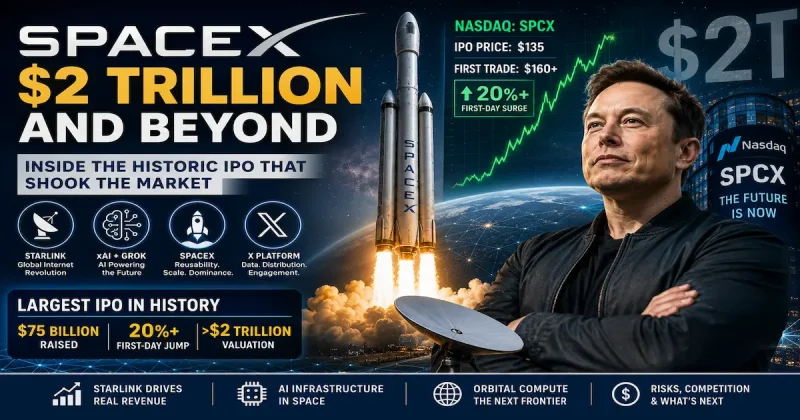
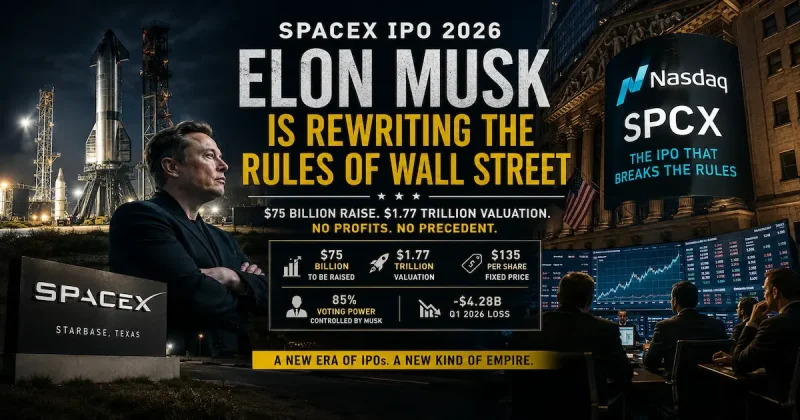
Comments
Leave a Comment
Your comment will appear after moderation.