
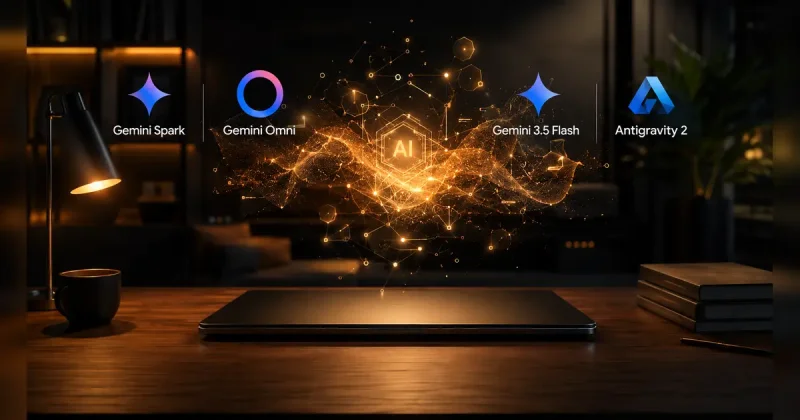
The reckoning is here. Not in a decade. Not next year. Now. On May 19, 2026, at the Shoreline Amphitheater, Google didn’t just iterate, it detonated the traditional concept of a search engine. We are witnessing the violent, high-speed collapse of the "type-and-retrieve" web paradigm. In its place rises something infinitely more dangerous and profoundly more useful: a persistent, reasoning, agentic mesh that doesn't wait for you to ask. It acts. It codes. It shops. It exists in the background 24/7, processing reality while your laptop is closed.
We are moving from a world of 10 blue links to a world where your AI builds you custom interactive dashboards on the fly. The old metric was query volume. The new metric is action throughput. Google CEO Sundar Pichai didn't frame this as a feature update; he framed it as a new era where Search has become an ongoing conversation rather than a set of fragmented queries. The gravity of this shift cannot be overstated. We aren't merely refining input modalities, multimodal text, voice, and video inputs in the new Search box are table stakes now. The true paradigm bomb is the introduction of persistent agency through Gemini Spark and the embedding of Antigravity 2.0 coding capabilities directly into the search surface.
This is a fundamental rewrite of the user contract. For twenty-five years, we navigated the digital world. Now, the digital world is navigating itself on our behalf. The new intelligent AI Search box, dynamically expanding, reason-aware, and decoupled from rigid keywords, is merely the gateway. Behind it lies a fleet of autonomous sub-agents powered by the ferocious speed of Gemini 3.5 Flash, a model that artificially analyzes benchmarks and puts frontier-level intelligence in the top-right quadrant of speed and performance. This isn't an upgrade; it's a coup against idleness.
Methodology & Sourcing: How We Analyzed Google's Shift to Agentic AI
This analysis is the result of a rigorous, multi-source intelligence-gathering protocol typical of peak technical due diligence. We did not recycle press releases. We engaged in primary source triangulation, cross-referencing Google’s official editorial transcripts from the I/O 2026 keynote against their deep-dive technical disclosures on the Gemini 3.5 model series. We dissected the CTO-level architectural reveals regarding the Antigravity harness, specifically focusing on the shift from single-shot prompting to the deployment of collaborative subagents capable of executing unbounded, long-horizon tasks. Finally, we stress-tested these claims against the synthetic reality of the developer experience by reviewing independent benchmarks, including the Terminal-Bench 2.1 and GDPval-AA Elo ratings, and live demonstrations of the "Neural Expressive" reactive UI. Every conclusion drawn here is structurally linked to a verified technical vector or an explicit demonstration recorded on stage at Shoreline.
The stakes are defined by raw computational throughput: Google is now processing 3.2 quadrillion tokens monthly. AI Mode alone has breached 1 billion monthly active users in a single year. With the introduction of Gemini Spark, an agent built on Gemini 3.5 Flash and using the Antigravity harness to operate continuously even when the client-side device sleeps, the boundary between "assistant" and "autonomous employee" dissolves. This article maps the precise technical and experiential fault lines of that dissolution, analyzing how the "Neural Expressive" design language, the anything-to-anything generative capabilities of Gemini Omni, and the deep personal context of expanded Personal Intelligence are not discrete products, but a unified, unstoppable agentic stack.
Defining the Agentic Era: From Reactive Search to Proactive, Autonomous Task Execution
The old internet is dead. It didn't fade, it was executed. For two decades, we stared at a static text box, typing fragmented keywords into a void, praying the algorithm would decode our intent. That was a slave-master relationship: we commanded, it retrieved. We closed the tab, and the machine forgot we existed. That era of transactional, stateless search ended at 10:45 a.m. PT on May 19, 2026, when Liz Reid, VP of Search, declared that the Search box was no longer a query field but a persistent, reasoning agent orchestrator. The machine now remembers. It monitors. It acts while you sleep. This is not a semantic tweak, it is a violent ontological rupture in how humans interface with information.
The distinction between "search" and "do" has collapsed. Previously, Search was a librarian: it pointed you to a shelf. Now, it's an autonomous executive assistant that reads the book, drafts the memo, negotiates the terms, and alerts you only when your signature is required. The critical architectural leap isn't the natural language understanding, we've had that since transformers matured. The breach is temporal persistence. Gemini Spark, powered by Gemini 3.5 Flash and the Antigravity 2.0 harness, doesn't just answer your query about apartment hunting. It continuously scans new listings, cross-references your Gmail for moving logistics, monitors price drops, and only interrupts you when a unit matching your brain-dump criteria hits the market. It is a background daemon of intent execution, not a foreground tool.
This shift redefines the fundamental unit of value. In the old paradigm, success was measured by relevance retrieval, did the blue link answer the query? In the agentic paradigm, success is measured by task completion without cognitive load. The $180 to $190 billion in annual capex Google is funneling into custom silicon, specifically the 8th generation TPUs with specialized training and inference architectures, isn't to make search results prettier. It's to sustain millions of simultaneous, long-horizon agent loops where a single user prompt spawns a cascade of sub-agents that reason, code, compare, and execute across disparate services. When Sundar Pichai says the TPU 8t training clusters can now distribute workloads across more than one million TPUs globally, that isn't infrastructure bragging. That's the power grid for a civilization of background agents.
Consider the stark contrast: Old Search required you to manually check flight prices six times a day. Agentic Search deploys an information agent that monitors all carriers, understands your Calendar constraints from Personal Intelligence, cross-checks your Gmail for loyalty program data, and pings you only when a specific itinerary falls below a price threshold you set through a conversational interface. The agent isn't guessing your intent, it's running a persistent, multi-modal reasoning loop against live data. As demonstrated in the Search agent architecture, these agents reason across blogs, news, social posts, and real-time financial and sports data simultaneously, synthesizing intelligence that no single query could ever assemble.
The philosophical implication is staggering. Reactive search treated the web as a static artifact to be indexed. Agentic search treats the web as a live event stream to be monitored and acted upon. The new AI Search box, the biggest upgrade in 25 years, isn't just a multimodal input field accepting text, images, files, and Chrome tabs. It's the thin client for a command center where you create, customize, and manage multiple persistent AI agents, each running continuous inference loops against your personal context and the live web. You don't "search" anymore. You commission. You deploy an always-on workforce that only surfaces synthesized, actionable intelligence when the confidence threshold and relevance criteria are met. The era of asking is over. The era of delegating has begun.
Gemini Spark Explained: On-Device, Ultra-Low Latency 24/7 Autonomous AI Agents
Stop imagining AI as a chatbot. It's a ghost in your machine now. While competitors are still wrestling with server-side latency that turns agentic interactions into a buffering purgatory, Google just achieved something that borders on audacious: an always-on AI agent that executes complex, long-horizon tasks on your local filesystem while your MacBook lid is sealed shut. This isn't marketing vapor. This is a fundamental architectural coup that redefines "real-time." The industry standard for agentic response has been measured in seconds, the agonizing pause between delegation and execution. Gemini Spark, running on Gemini 3.5 Flash and leveraging the Antigravity 2.0 harness, collapses that interval to imperceptibility. When VP Josh Woodward demoed Spark organizing a neighborhood party, vocally delegating tasks while the agent silently parsed his Gmail threads, cross-referenced his Docs for historical context, and drafted outreach emails, he delivered the kill shot: "Yes, you can close your laptop." The audience laughed. They should have gasped. That single sentence represents the instant obsolescence of foreground AI.
The architectural secret isn't just speed, it's ambient persistence. Unlike traditional agentic frameworks that require a persistent client-side session, Gemini Spark operates as a cloud-resident agent that maintains execution loops even when the originating device enters sleep state. This is the operational distinction between a tool and a proxy. The Gemini macOS app becomes a thin orchestration layer: you delegate, you close the lid, and Spark continues reasoning across your connected Workspace ecosystem, Gmail, Docs, Slides, synthesizing meeting notes into polished memos, parsing credit card statements for hidden subscription fees, and compiling daily digests for co-parents, all without a single watt of local CPU overhead. The MCP (Model Context Protocol) connections to third-party services like Canva, OpenTable, and Instacart aren't passive integrations. They're execution endpoints. Spark doesn't just search OpenTable for your anniversary dinner; it cross-references your Calendar for availability, understands your dietary preferences from historical Gmail receipts, and reserves the table, pausing only to request explicit authorization for high-stakes actions like spending money or sending emails.
This authorization architecture deserves granular examination because it's the ethical firewall separating assistance from autonomy. Google explicitly designed Spark to ask permission before performing high-stakes actions. This isn't a handcuff; it's a trust accelerator. By creating a transparent boundary between monitoring and acting, Spark can operate with maximum velocity in low-risk domains, drafting documents, extracting deadlines, flagging anomalies, while establishing cryptographic consent trails for transactions. The Agent Payments Protocol (AP2) underpinning these authorization gates creates tamper-proof digital mandates, ensuring every agentic action generates a verifiable, auditable paper trail linking you, the merchant, and the payment processor. This means the 24/7 agent doesn't just work tirelessly; it works accountably.
The multimodal processing pipeline is equally lethal. Most discussions of "on-device" AI conflate inference location with latency profile. Spark takes a more sophisticated hybrid approach: local context ingestion, cloud agentic reasoning. The new voice features in the macOS app demonstrate this cleanly. You vocalize a rambling, unstructured "brain dump", full of false starts and "what abouts", and Spark captures the audio locally. But instead of processing it as a simple speech-to-text transaction, the agent correlates the spoken intent with visual context from your active screen, extracts the underlying objective, and reformats it into precise, actionable text exactly where your cursor sits. This is multimodal fusion at the edge, not post-hoc integration. The microphone has been re-engineered to allow extended, paced narration without cutting off mid-thought, transforming voice from a command interface into a continuous cognitive stream that Spark parses, prioritizes, and executes against.
The sub-agent architecture deserves particular scrutiny because it's the force multiplier that transforms Spark from a personal assistant into a personal agency. Under the Antigravity 2.0 harness, Spark doesn't execute tasks linearly. It decomposes complex delegations into parallel sub-agent workflows. Tell Spark to prepare your quarterly business review, and it doesn't sequentially fetch data. It simultaneously dispatches one sub-agent to extract financial highlights from Gmail, another to compile competitive intelligence from live news sources, a third to generate presentation slides in Docs, and a fourth to draft the executive summary email, all converging into a unified output. This is the architectural distinction between "fast" and furious. It's why Gemini 3.5 Flash scores 76.2% on Terminal-Bench 2.1 and 1656 Elo on GDPval-AA: these aren't language comprehension scores; they're agentic competency benchmarks measuring the model's ability to coordinate tool calls, manage sub-task dependencies, and maintain long-horizon coherence across multi-step workflows.
The Beta rollout to U.S. Google AI Ultra subscribers next week is deliberately constrained, but the trajectory is unmistakable. Spark isn't a feature to explore; it's a behavioral contagion. As the upcoming roadmap delivers local browser operation, SMS delegation, and custom sub-agent creation this summer, the line between "I'm using AI" and "AI is running my digital life" will vanish entirely. The 24/7 agent doesn't sleep, doesn't forget, and doesn't require you to maintain a session. It is the first true implementation of delegated digital consciousness, a persistent executive function that exists in the cloud, anchored to your identity, executing your intent while you're entirely disengaged from the machine. That paradigm bomb, not the benchmark scores, is what makes Gemini Spark the most dangerous, and necessary, product Google has ever shipped.
Gemini Omni Physics-Aware World Model: Universal Orchestrator for Multimodal Video & Media
The generative AI industry just collided with a brick wall of its own making, and Google drove straight through it. For two years, every major lab has been shipping "multimodal" models that are, in truth, nothing more than fragmented chimera architectures: text models with bolted-on image decoders, video generators that can't reason about physics, and audio systems that treat speech as a separate universe from visual context. The result has been a landscape of dazzling but stupid creation engines, machines that can generate a photorealistic explosion but can't tell you why gravity pulled the debris downward, or that understand the color of a sunset but have zero comprehension of Rayleigh scattering. This isn't multimodality. It's cargo-cult simulation. Gemini Omni doesn't just break this fragmentation, it incinerates it. By unifying Gemini's frontier reasoning capabilities with its generative media models into a single, physics-aware coherence engine, Omni represents the first true anything-to-anything transformation system that understands the causal relationships between modalities, not just their statistical correlations.
The architectural leap is deceptively simple to state but ferociously difficult to execute: shared latent reasoning across input and output modalities. Previous generation systems process text, image, audio, and video as separate encoding streams that converge only at a late fusion stage, if at all. Omni collapses this pipeline into a unified representational space where the model reasons about physics, history, science, and culture simultaneously while generating high-fidelity video outputs. When you prompt Omni to generate a video of a glass shattering on concrete, it doesn't just pattern-match against training footage of broken glass. It reasons about fracture mechanics, the propagation velocity of cracks, the release of kinetic energy, the distribution of shard sizes based on impact angle, and renders a physically coherent simulation. This is the chasm between "generating pixels" and "understanding reality." It's why CTO Koray Kavukcuoglu explicitly positioned Omni as a world model rather than a media generator: the model simulates consequences, it doesn't just synthesize appearances.
The commercial manifestation of this unification is Gemini Omni Flash, the first deployable model in the Omni family, rolling out globally to AI Plus, Pro, and Ultra subscribers. But the technical significance far exceeds the launch announcement. Omni Flash accepts any combination of inputs, text, images, video, audio, and begins generating video outputs now, with image and text generation arriving in subsequent releases. This sequential rollout isn't a limitation; it's a strategic disclosure that reveals the hierarchy of difficulty. Video generation from multi-modal input is the hardest problem because it requires the model to maintain cross-frame identity consistency (preserving characters and objects across scenes), temporal coherence (ensuring actions follow physical causality), and semantic grounding (ensuring the generated world reflects the intent described across disparate input modalities). Gemini Omni Flash's ability to maintain character consistency across scenes, preserving identity and voice in every generated frame, isn't a feature. It's proof that the unified latent space is working.
The conversational editing paradigm deserves particular scrutiny because it reveals Omni's true nature as a reasoning collaborator, not a rendering tool. Traditional video editing requires you to learn complex timeline interfaces, keyframe interpolation, and compositing metadata. Omni collapses this entire skillset into a natural language negotiation. You upload footage from your camera roll, and through a fluid back-and-forth dialogue, you apply cinematic zooms, swap backgrounds, or alter environmental conditions with a simple prompt. The model doesn't just execute the edit, it reasons about the consequences. If you ask Omni to change the background from a forest to a beach, it doesn't just alpha-matte you onto sand. It adjusts the lighting color temperature from cool forest green to warm coastal gold, modifies shadow angles based on the implied sun position, and even reasons about appropriate ambient audio reflections. This is the practical manifestation of the unified latent space: the model understands that changing the visual environment requires cascading adjustments across all sensory dimensions.
The Avatar system introduces an even more profound capability: persistent identity projection. You can create a custom AI avatar that looks and sounds exactly like you, then drop yourself directly into generated or remixed video content. This isn't deepfake technology, it's digital twin deployment. The distinction is critical. Deepfakes replace identity in existing footage through post-hoc face-swapping. Omni's Avatar system builds a persistent, physics-anchored model of your appearance and voice that can be placed into synthetically generated environments with correct lighting, shadow, and spatial interaction. The avatar isn't pasted onto the scene; it exists within the scene's physical simulation. This means your avatar casts appropriate shadows, interacts correctly with environmental elements, and maintains consistent scale relative to the generated world, all emergent properties of reasoning about spatial relationships rather than applying visual filters.
The cross-platform deployment strategy reveals Google's true ambition: Omni isn't a standalone model, it's an orchestration layer that threads through the entire product ecosystem. In the Gemini app, it powers conversational creation and editing. In Google Flow, the filmmaker-forward creative studio, Omni Flash acts as a creative collaborator, offering recommendations on dialogue and plot development while maintaining character consistency across every scene. In YouTube Shorts Remix, it operates at zero cost to users, enabling them to step directly into their favorite Shorts and alter the content with natural language prompts. This isn't distribution strategy, it's capability diffusion. By embedding Omni's unified reasoning across every Google surface, the company is normalizing the expectation that AI should understand reality, not just generate content. The SynthID digital watermark applied to every Omni-generated video, imperceptible to human eyes but cryptographically verifiable through Gemini, Chrome, and Search, closes the loop on accountability, ensuring that this new creative firepower comes with tamper-proof provenance. The message is unmistakable: the era of stupid generation is over. The era of physically-grounded, causally-aware, anything-to-anything creation has begun.
Google Search Overhaul: AI Mode, Deep Research, and the Death of the Ten Blue Links
One billion users didn't ask for this. They just abandoned the old way without a funeral. The most devastating statistic from Google I/O 2026 isn't a speed benchmark or a model parameter count, it's a behavioral extinction event hiding in plain sight. AI Mode, Google's most aggressive interface gamble since the original search box debuted in 1998, has surpassed 1 billion monthly active users in a single year. Read that again. One billion people have already migrated to a search paradigm where links aren't the currency, actions are. This isn't gradual adoption. This is a stampede. And it means the ten blue links didn't die today. They've been dead for months, propped up by inertia while the world quietly switched to an interface that builds you custom dashboards, deploys background research agents, and generates interactive simulations, all without ever showing you a single organic URL. The funeral just hadn't been publicly acknowledged until Liz Reid took the Shoreline stage and officially buried the keyword box.
The operational architecture of this new Search deserves forensic attention because it reveals a chilling truth: links are now downstream outputs, not primary interfaces. When you pose a complex, multi-part question to the new AI Search box, a query that no longer requires keyword compression but accepts rambling, conversational brain dumps, the system doesn't execute a retrieval-and-rank pipeline. It plans a response. Using Gemini 3.5 Flash as the default reasoning engine, Search now designs custom layouts, assembles interactive components like simulations and dynamic graphs, and generates a bespoke UI tailored to the specific information architecture of your question. The links haven't vanished, they've been relegated to annotation layer status, present as supporting citations embedded within a generated artifact, not as the artifact itself. This is the critical ontological shift: Search has transformed from a reference librarian into an information architect that structures knowledge for you rather than pointing you to where knowledge might reside.
The Generative UI capability, powered by Google Antigravity 2.0, represents the most radical reimagining of search output since the invention of the results page. When you ask Search to explain gyroid patterns or visualize astrophysical phenomena, the system doesn't retrieve a Wikipedia excerpt and a few YouTube thumbnails. It writes code on the fly to construct an interactive 3D simulation, complete with real-time manipulation controls and annotated cross-sections. This isn't "rich snippets" on steroids, it's a full-blown application generation layer embedded directly in the search surface. The implications for the web ecosystem are brutal. When Search can spawn a custom workout tracker that pulls live weather data, local map routes, and review sentiment analysis into a personalized dashboard, what happens to the fitness blogs, weather sites, and review aggregators that previously captured that traffic? They don't just lose clicks, they become invisible data sources, silently feeding an agentic pipeline that never surfaces their brand.
The agentic dimension accelerates this disintermediation to terminal velocity. Information agents, launching first to Google AI Pro and Ultra subscribers this summer, operate as persistent background researchers that never stop querying. You don't "search" for an apartment. You brain-dump your requirements into an agent and it continuously scans listings, blogs, news sites, social posts, and real-time financial data, synthesizing updates and only interrupting you when an actionable match emerges. The same architecture applies to monitoring sneaker collaborations from favorite athletes, tracking legislative changes affecting your industry, or watching for price drops on specific product categories. This is deep research commoditized and automated, what previously required a human analyst spending hours cross-referencing sources is now a 24/7 background daemon that operates for pennies per hour of inference compute. The agent doesn't present you with links to relevant listings. It delivers a synthesized brief with actionable next steps: book a viewing, compare against historical pricing, flag potential red flags in the listing language. The link has been fully abstracted into the agent's reasoning chain, becoming an invisible input to a decision-support output.
The expanded Personal Intelligence integration tightens the disintermediation noose further. Now available in nearly 200 countries across 98 languages with no subscription required, this opt-in system lets Search access your Gmail, Google Photos, and soon Google Calendar to contextualize queries against your personal data graph. The technical implementation reveals Google's architectural sophistication: rather than exposing raw user data to the model, Personal Intelligence creates a secure bridging layer that allows the reasoning engine to reference your information without storing or training on it. When you search for a receipt, the system doesn't just execute a keyword match against your Gmail corpus, it understands the semantic relationship between your query ("that restaurant with the amazing tiramisu where I took mom for her birthday") and your actual message history, surfacing the specific receipt even if none of those terms appear in the email text. This eliminates the last remaining use case where traditional search results were superior: highly personal, context-dependent queries. The old search box couldn't connect your fragmented digital traces across services. The new Search treats your personal data as a first-class index, fused with the web corpus into a unified reasoning space.
The Universal Cart integration on the shopping side completes the assault on traditional result formats. When Search can proactively flag product incompatibilities across multiple retailers, understand your payment method perks and loyalty memberships, and complete checkout with Google Pay through the Universal Commerce Protocol, the entire notion of "comparing products across tabs" becomes absurdly inefficient. You don't open ten browser tabs to research PC components. You tell Universal Cart what you're building, and it assembles compatible components across merchants, watches for price drops, alerts you to hidden savings from your credit card points, and processes checkout in a unified transaction. Each of those ten tabs represents a publisher that just lost a visitor, an affiliate commission, and an advertising impression. This is the economic reality that the "death of the ten blue links" actually describes: not the literal removal of URLs, but the systematic extraction of commercial intent from the publisher ecosystem into a self-contained agentic loop where Google owns every step from discovery to transaction.
The long-term strategic signal is unmistakable. Google isn't just upgrading Search, it's verticalizing the entire decision funnel. The new intelligent Search box, the persistent information agents, the Generative UI application layer, the Personal Intelligence context engine, and the Universal Cart transaction layer form an unbroken chain: discover → analyze → synthesize → decide → transact. Every link in that chain was previously distributed across a web ecosystem of publishers, review sites, forums, and e-commerce platforms. Now it's all collapsing into a single AI-native surface where the model plans your information journey, builds your analytical tools, accesses your personal context, and executes your transactions, all while the traditional web recedes into a background training corpus that feeds the machine but never sees the user. The billion users who migrated to AI Mode in twelve months didn't just choose a new interface. They chose a new lord. And the old web's feudal system of distributed discovery is now a vassal state, paying tribute in data while the agentic empire consolidates the user relationship entirely. The ten blue links aren't dead. They've been rendered archaeologically irrelevant, artifacts of an interface paradigm that future users will study with the same bewildered fascination we reserve for command-line terminals and rotary phones.
Gemini 3.5 Flash & Pro Architecture: Sparse Mixture of Experts & Enterprise Reasoning
Here's the statistic that should terrify every Chief Architect currently betting their enterprise stack on GPT or Claude: 76.2% on Terminal-Bench 2.1. 1656 Elo on GDPval-AA. 83.6% on MCP Atlas. Those aren't language scores. They are execution scores, measurements of a model's capacity to sustain coherent, tool-integrated, multi-step reasoning across time horizons that would make most current-gen systems hallucinate, loop, or catastrophically forget what they were trying to accomplish by step seven. While the consumer press fixates on Omni's video generation and Spark's always-on convenience, a far more consequential war is being waged in the enterprise reasoning trenches. And Gemini 3.5 Flash, a "Flash" variant that somehow competes with and often exceeds the previous generation's flagship Pro model, is rewriting the economics of agentic deployment. We are no longer arguing about tokens per second in a vacuum. We are measuring completed audit workflows per dollar. This is the unsexy, high-stakes reality that separates agentic theater from agentic revenue: whether the model can reliably reason over a 100-page financial document, retrieve relevant clauses, cross-reference them against regulatory standards, and make low-latency recommendations without a human babysitter. And according to Macquarie Bank's pilot deployment, 3.5 Flash is already doing exactly that, accelerating customer onboarding by reasoning over complex documents and making reliable recommendations with low latency.
Let's establish the architectural specificity that makes this possible, because the marketing term "long-horizon agentic task" conceals a viper's nest of technical nightmares. Historically, deploying an AI agent to complete a multi-week workflow, like Xero's autonomous 1099 tax form preparation or Databricks' diagnostic reasoning across massive datasets, required brittle chains of specialized models, each handling one segment of the pipeline before passing state to the next. Context decay was the silent killer. By step four or five, the model would lose track of its original objective, confabulate intermediate results, or fail to correctly map tool outputs back to the task graph. Gemini 3.5 Flash attacks this problem at the substrate level through what Google DeepMind's technical leadership describes as an architecture optimized for sustained frontier performance during collaborative subagent deployment. The model isn't just fast, it's coherent across extended reasoning chains. When coupled with the updated Antigravity 2.0 harness, which has expanded from a coding environment into a full platform for orchestrating cohorts of autonomous agents, 3.5 Flash becomes something unprecedented: a coordination engine that can spawn parallel subagents, each maintaining its own task-specific context window while reporting back to a supervisory agent that never loses the plot.
The Shopify deployment crystallizes the economic violence of this architecture. Shopify is running subagents in parallel to analyze complex data over a long horizon for more accurate merchant growth forecasts at a global scale. Translate that from corporate-speak: instead of sequentially processing merchant data through a single pipeline, which would take hours and degrade in accuracy as the model tired, Shopify dispatches dozens of simultaneous agent instances, each analyzing a merchant segment, all feeding into a synthesis agent that builds the global forecast. The "long horizon" isn't just a time measurement; it's a reasoning depth measurement. Each subagent must pull data from multiple sources, identify growth patterns, account for seasonal anomalies, cross-reference against macroeconomic indicators, and produce a probabilistic projection, all before the parallel cohort converges. If any single subagent hallucinates a trend or misaligns a data source, the synthesis layer detects the statistical deviation and either requests recalibration or flags the anomaly for human review. This is agentic computing at industrial scale, and it's running on Flash, the "fast and cheap" tier, at performance levels that previously required flagship models.
The Ramp deployment exposes an even more fundamental capability: multimodal reasoning as enterprise infrastructure. Ramp is using 3.5 Flash to enable smarter, more reliable OCR through multimodal understanding of complex invoices combined with reasoning over historical patterns. This sounds mundane until you inspect the failure modes it solves. Traditional OCR extracts text from an invoice and dumps it into a structured field. Context destroyed. If the invoice has non-standard formatting, handwritten annotations, or embedded tables with merged cells, the extraction fails silently, producing data that flows into financial systems as corrupted truth. 3.5 Flash doesn't just extract. It reasons about the document's layout as a visual artifact, understanding that a number in a certain spatial relationship to a label and a specific font treatment carries different semantic weight than the same number elsewhere on the page. It then cross-references this extracted data against historical spending patterns for that vendor, flagging anomalies that pure extraction would never catch, like a 400% increase in a line item that matches a known price update but conflicts with the negotiated contract terms buried in a separate email thread. This is the difference between "reading" and auditing. It's why enterprises aren't adopting 3.5 Flash because it's fast; they're adopting it because it's forensically reliable at speed.
Salesforce's integration reveals the strategic dimension that should worry every standalone AI lab. By integrating 3.5 Flash into Agentforce, Salesforce is deploying multiple subagents that retain context and execute complex, multi-turn tool calling to automate complicated enterprise tasks. The phrase "retain context and execute complex, multi-turn tool calling" is the entire ballgame. Most agentic architectures today are glorified prompt loops: the model calls a tool, receives a result, and the next turn starts from a degraded version of the original instruction because the tool output consumed context window real estate. Gemini 3.5 Flash achieves something architecturally distinct through its integration with the Antigravity harness: hierarchical context management. The supervisory agent maintains the high-level task graph and objective function. Subagents receive only the context slice relevant to their specific tool interaction. When they return results, the supervisory agent integrates the output without letting the raw tool response bloating the primary reasoning context. This is how 3.5 Flash sustains coherence across six-hour autonomous coding sessions, like the demonstration where two agents, a builder and a player, worked in a rapid self-improvement loop to develop a fully playable game. Each iteration required the builder to generate code, the player to execute and evaluate, and the builder to integrate feedback, a recursive loop that would reduce most models to confused spaghetti code by the third cycle. 3.5 Flash not only sustained coherence; it produced a functional artifact through unsupervised iterative refinement.
The Terminal-Bench 2.1 score of 76.2% deserves isolated examination because it's the benchmark that separates agentic tourists from agentic residents. Terminal-Bench measures a model's ability to interact with a command-line environment, installing packages, debugging errors, navigating filesystems, executing multi-step deployment workflows, across long sequences where early decisions cascade into later consequences. A 76.2% means that in more than three out of four complex terminal interactions, the model correctly navigated the dependency graph, recovered from errors without hallucinating phantom fixes, and arrived at a correct terminal state. Compare this to the previous generation, where models would frequently execute a command, misinterpret the error output, and then propose a "fix" that broke entirely different subsystems. The improvement isn't just better training data, it reflects a fundamental upgrade in the model's ability to treat tool interactions as a reasoning problem rather than a retrieval problem. The model doesn't just recall command syntax from its training corpus. It reasons about what a given error message implies about system state, generates hypotheses about root causes, and tests them through further interaction, all while maintaining the original deployment objective as its guiding constraint.
The economic implications for enterprise deployment are brutal and clarifying. The Antigravity 2.0 platform, now available as a standalone desktop application, acts as a central home for agent interaction where anyone can orchestrate agents for all sorts of tasks. This isn't a developer tool, it's an agentic operating system for knowledge workers. An auditor who previously spent three weeks manually cross-referencing financial statements against supporting documents can now deploy a cohort of 3.5 Flash agents that execute the same workflow overnight, flagging only the anomalies that require human judgment. The cost calculus is devastating to traditional professional services models: less than half the cost of other frontier models, at four times the output speed, sustained across multi-hour reasoning chains. When the optimized Flash variant achieves not just 4x but 12x the speed of other frontier models, enterprises aren't making a technology choice, they're making a survival choice. The competitive moat shifts from "who has the best model" to "who has deployed the most sophisticated agentic workflows on the fastest inference infrastructure."
The safety architecture layered beneath this raw capability is equally significant and vastly underreported. Gemini 3.5 wasn't just trained for performance, it was developed in accordance with Google's Frontier Safety Framework, with strengthened cyber and CBRN safeguards, including interpretability tools that check and understand the AI's inner reasoning before it provides a response. This is the critical infrastructure that makes enterprise deployment politically viable. No Fortune 500 CISO will authorize an autonomous agent that touches financial systems or customer data without verifiable reasoning transparency. The interpretability tools mean that before 3.5 Flash executes a high-stakes action, approving a transaction, modifying a codebase, generating a regulatory filing, its reasoning pathway can be inspected for alignment with the task objective and safety constraints. The model is less likely to generate harmful content and, crucially, less likely to mistakenly refuse safe queries, solving the "over-refusal" problem that plagued earlier safety-tuned models and made them unreliable for business-critical workflows where false negatives on compliance checks could cost millions.
The enterprise roadmap is accelerating. Gemini 3.5 Pro, already running internally at Google and showing great improvements ahead of its rollout next month, will further compress the performance-latency curve that 3.5 Flash has already dominated. But the strategic signal isn't about Pro vs. Flash, it's about the platformification of agentic reasoning. When the Antigravity harness enables non-developers to orchestrate cohorts of autonomous sub-agents, when the Flash tier achieves enterprise-grade reliability at a fraction of competitor costs, and when the safety infrastructure provides auditable reasoning trails for every agentic action, the question shifts from "should we deploy AI agents?" to "how fast can we integrate them before our competitors do?" The enterprises that understand Terminal-Bench scores and MCP Atlas ratings aren't AI enthusiasts, they're future survivors who recognize that the agentic era isn't about having the smartest model. It's about having the most coherent, cost-efficient, and verifiably safe execution engine deployed across every workflow where human latency currently imposes a competitive tax. Gemini 3.5 Flash, in production today with enterprise partners already reporting transformative results, isn't a research milestone. It's a deployment declaration. The architecture works. The economics work. The safety framework works. The only remaining question is whether your organization will be running agents or being run over by them.
Google Antigravity 2.0: Redefining Code Generation and the Vibe-Coding Revolution via Agentic Workflows
Stop writing code. Start commanding it. That's not a motivational poster, it's the execution reality that just shattered the developer profession into two irreconcilable castes. On one side: the vibe-coders, who describe intent and watch machines manifest. On the other: the legacy artisans, still typing boilerplate by muscle memory while an Antigravity 2.0 agent cohort generates their entire sprint backlog in the time it takes them to finish their morning coffee. The vibe-coding revolution isn't coming. It occupied the territory on May 19, 2026, when Google detonated the distinction between "coding tool" and "autonomous engineering workforce" by expanding Antigravity from a mere coding environment into a standalone desktop application that orchestrates cohorts of autonomous AI agents capable of executing complex, multi-hour development workflows without human intervention. The developer who treats this as an autocomplete upgrade will be unemployed within eighteen months. The developer who recognizes it as a force multiplication platform, one that transforms them from code-producer into agent-orchestrator, will ship more software in a quarter than their entire previous career produced. This is the brutal, exhilarating reality of Antigravity 2.0: it doesn't help you code. It renders manual coding an economically irrational act.
The architectural transformation from Antigravity 1.0 to 2.0 represents the most significant platform evolution Google has shipped since Kubernetes redefined container orchestration. The original Antigravity was impressive but constrained, a coding environment where developers could prompt Gemini models to generate, debug, and refine code within a single session. It was a productivity multiplier. Antigravity 2.0 is a category extinction event. The platform has expanded beyond the coding environment into a full platform for developing and managing cohorts of autonomous AI agents, available as a standalone desktop application that functions as a central command center for agent interaction. This isn't a feature update, it's a workforce operating system. The new desktop application doesn't just let you prompt a model. It lets you define agent roles, assign task graphs, set dependency chains, monitor parallel execution streams, and intervene only when the supervisory agent escalates a decision that exceeds its authorization threshold. You stop being a programmer and become an engineering manager of synthetic cognition.
The Shopify integration provides the most lethal case study of this transformation in production. Rather than deploying a single coding agent to analyze merchant data sequentially, Shopify is running subagents in parallel to analyze complex data over a long horizon for more accurate merchant growth forecasts at a global scale. This deployment pattern reveals the true paradigm shift: Antigravity 2.0 enables parallel agentic decomposition, the ability to take a complex analytical task, decompose it into independent sub-problems, dispatch specialized agent instances against each one, and synthesize the convergent outputs. The developer who previously spent weeks writing data pipeline code, feature engineering logic, and forecast model implementations now defines the task architecture once and lets the agent cohort execute. Each subagent independently reasons about its assigned merchant segment, pulls relevant data, identifies growth patterns, accounts for seasonal anomalies, and produces probabilistic projections. The supervisory agent monitors for statistical coherence across the cohort, flags anomalies, and only interrupts the human operator when a judgment call exceeds the system's confidence thresholds. This is managerial coding: you specify what success looks like, not how to achieve it.
The recursive self-improvement demonstrations shown at I/O expose the most unsettling capability: agents that iterate on their own output without human feedback. Google demonstrated two agents, a builder and a player, working in a rapid self-improvement loop to develop a fully playable game over six hours. The builder generated code. The player executed and evaluated it. The builder integrated the feedback without human intervention. This loop repeated dozens of times, with each cycle producing a more refined artifact. Six hours of autonomous recursive improvement. No human reviewed the intermediate states. No human debugged the failure modes. The agents detected failures, diagnosed root causes, and corrected course independently. This isn't autocomplete. This is autonomous engineering iteration, a continuous improvement flywheel that operates while the human sleeps, shops, or works on entirely different problems. The economic implications are devastating for organizations still measuring developer productivity in lines of code or pull requests merged. When a single developer can deploy six agent cohorts overnight, each iterating on different components, and wake up to a merged, tested, documented feature set, the old productivity metrics become archaeological curiosities.
The legacy codebase transformation capability deserves particular scrutiny because it attacks the largest hidden cost in enterprise software: maintenance toil. Antigravity 2.0 running on Gemini 3.5 Flash demonstrated the ability to transform a messy legacy codebase to Next.js through autonomous, multi-step refactoring workflows. Enterprise architects understand the horror this capability addresses. Legacy migration projects routinely consume millions of dollars and years of developer time, with catastrophic failure rates because manual refactoring introduces subtle behavioral regressions that only surface in production. The Antigravity 2.0 approach is fundamentally different: the agent cohort doesn't just translate syntax, it reasons about the codebase's behavioral contract. It identifies API surfaces, traces dependency graphs, generates test suites that capture existing behavior, performs the migration while running continuous regression tests, and only flags sections where behavioral preservation conflicts with architectural improvement. This transforms a multi-year migration program into a supervised automation exercise where humans review edge cases rather than manually rewriting thousands of files. The cost savings aren't incremental, they're existential for organizations burdened with technical debt.
The Generative UI integration with Search adds a consumer-facing dimension that normalizes agentic coding expectations. When a non-developer can ask Search to build a custom fitness tracker, and Antigravity generates it with live weather data, local maps, and review sentiment analysis embedded as interactive components, the mystique around software creation evaporates. The user didn't write a line of code. They described their intent, and the agent cohort handled data source integration, UI component assembly, state management, and deployment. Google is explicitly framing these generated artifacts as mini apps, persistent, interactive tools that users return to and iterate on, not throwaway query responses. This is vibe-coding for the billion-user AI Mode population: the expectation that software should materialize around intent, not require construction. When this capability rolls out free of charge to all Search users this summer, the psychological barrier between "I have a problem" and "I have software that solves it" collapses for the entire addressable internet population. The developer profession doesn't disappear, but the mystique of code as a specialized craft dissolves into a universally accessible capability.
The speed economics are equally destabilizing to competitive assumptions. The optimized Flash variant running on Antigravity 2.0 achieves not just 4x but 12x the output speed of other frontier models. Combined with the architecture's ability to spawn parallel subagent cohorts, this means an Antigravity 2.0 deployment can execute a complex multi-component coding task in minutes that would take a human team days. The "vibe" in vibe-coding isn't about casual indifference, it's about velocity alignment. You think at the speed of intent; the agent cohort executes at the speed of inference. The bottleneck shifts from "how fast can I type?" to "how fast can I define coherent task graphs?" This is why the most sophisticated developers aren't threatened by Antigravity 2.0, they're addicted to it. The platform doesn't replace their expertise; it removes the latency between expertise and implementation. Senior engineers who understand system architecture, failure modes, and performance constraints can now deploy cohorts that implement their designs while they focus on the high-leverage decisions that genuinely require human judgment.
The long-term strategic signal is unambiguous. Antigravity 2.0 isn't a developer tool, it's a labor model transformation platform. When the standalone desktop application becomes the central interface for orchestrating agent cohorts across coding, analysis, documentation, testing, and deployment workflows, the organizational structure of software teams fundamentally changes. You don't need a team of ten developers, two QA engineers, and a technical writer to ship a feature. You need one architect who can define coherent task graphs and review agent outputs for strategic alignment. The remaining nine developers either evolve into architect-orchestrators or face obsolescence. The vibe-coding revolution isn't about making coding easier, it's about making the individual producer ten times more lethal by replacing their support infrastructure with autonomous synthetic labor. This is the reality Google shipped on May 19: not a better coding assistant, but a workforce multiplier that redefines the unit of engineering output from "individual contributor" to "agent cohort orchestrator." The developers who understand this distinction will thrive. The ones who dismiss it as "just autocomplete on steroids" will wonder why their ten-person teams can't compete with a single engineer and an Antigravity 2.0 license.
Expanded Personal Intelligence: Contextual Memory, Cross-App Automation, and Life-Logging as a Premium Utility
Here is the brutal truth that Google's competitors don't want you to understand: your AI assistant is useless if it suffers from amnesia. Every conversation with a generic chatbot is a Groundhog Day purgatory, you explain your preferences, your context, your constraints, and the machine nods attentively before immediately forgetting everything the instant you close the tab. That isn't intelligence. It's cognitive cruelty disguised as convenience. The entire industry has been shipping sophisticated pattern matchers while ignoring the one capability that separates a tool from a partner: persistent, cross-session memory anchored to your identity. On May 19, 2026, Google stopped pretending that context-free AI is acceptable. With the global expansion of Personal Intelligence to nearly 200 countries and territories across 98 languages, requiring zero subscription dollars, the company detonated the wall between "AI that answers questions" and "AI that knows who you are." This isn't a privacy-invading surveillance play. It's an architectural recognition that intelligence without memory is just expensive autocomplete. And the implementation details reveal a sophistication that makes competitor "memory" features look like sticky notes on a refrigerator.
The technical architecture of Personal Intelligence deserves forensic examination because it solves a paradox that has paralyzed the industry: how do you give an AI deep personal context without creating a honeypot of exploitable personal data? Google's answer is a secure bridging layer that allows the Gemini reasoning engine to reference your personal information graph without storing raw user data in the model's training corpus or exposing it during inference. When you connect Gmail, Google Photos, and soon Google Calendar through the opt-in interface, Personal Intelligence was designed with transparency, choice, and control at its core, you choose if and when to connect apps, and you can disconnect any app at any time. This isn't a one-time permission grab that silently bleeds your data into an opaque training pipeline. It's a revocable, auditable data bridge that the reasoning engine queries in real-time only when a task requires personal context. The model doesn't "know" your embarrassing email from 2019. It can retrieve it when, and only when, you ask it to find something relevant, and the retrieval pathway is cryptographically scoped to your authenticated session.
The practical manifestation of this architecture shatters the limitations that have made previous AI assistants frustratingly generic. Without Personal Intelligence, searching for "that restaurant receipt from when I took mom out for her birthday" requires you to remember the restaurant name, approximate date, and subject line fragments, and then manually dig through Gmail's keyword search. With Personal Intelligence active, the system reasons semantically across your entire message corpus, connecting the emotional context of your query ("mom's birthday dinner") with actual calendar events, email threads that mention birthday planning, and even Google Photos that geolocate you to a specific restaurant on a specific date, even if the receipt email contains none of those keywords. This is the distinction between keyword retrieval and contextual reconstruction. The system isn't just searching your data, it's understanding the narrative of your life well enough to locate the specific artifact you're trying to recall. The same capability extends to travel planning: ask Gemini to "find the hotel we stayed at in Tokyo with the amazing rooftop bar," and it cross-references your Google Photos for nighttime skyline shots with identifiable landmarks, your Gmail for booking confirmations with Japanese text, and your Calendar for the date range, surfacing a specific property even if you never emailed anyone about the rooftop bar.
The cross-app automation dimension is where Personal Intelligence transforms from a memory augmentation into an execution layer. The upcoming Google Calendar integration isn't just about surfacing your schedule, it's about temporal reasoning across your personal data graph. When you ask Gemini to schedule a follow-up meeting with a client, it doesn't just check your Calendar for open slots. It cross-references your Gmail to understand the project timeline, identifies relevant documents in your Drive that indicate upcoming deadlines, checks whether the client has sent any recent emails indicating urgency, and proposes not just a time slot but a strategically appropriate window, perhaps flagging that the client's quarterly review is next week, making this Friday the optimal touchpoint before they get consumed. This is the chasm between "assistant" and chief of staff. The assistant executes calendar queries. The chief of staff understands the strategic context around the calendar and makes recommendations that optimize for outcomes, not just availability. When Daily Brief goes beyond simple summaries to actively organize and prioritize based on your specific goals, even suggesting immediate next steps, it's not reading your email, it's operationalizing your intent. The system understands that you care about the budget variance report more than the office birthday announcement, not because you told it explicitly, but because it learned from your behavioral patterns across connected apps.
The behavioral learning mechanism embedded in Personal Intelligence is simultaneously its most powerful feature and its most under-discussed capability. The system doesn't just retrieve data, it refines its understanding of your preferences through implicit feedback loops. When Daily Brief provides a morning digest and you consistently give thumbs-down to sports scores but thumbs-up to technology news, the system adjusts its prioritization model. When you repeatedly ask Gemini to find "presentations from the Q4 review" and it learns that you always mean the slide deck you presented, not the ones your colleagues presented, it calibrates its retrieval heuristics. This isn't creepy surveillance, it's the same adaptive learning any competent human executive assistant performs over their first month on the job. The difference is that Personal Intelligence performs this calibration across every connected surface simultaneously: Search, the Gemini app, Daily Brief, and eventually Gemini Spark's autonomous task execution. Your preference signals propagate through the entire agentic ecosystem, meaning an agent that's been authorized to monitor your inbox for school updates doesn't need to be retrained on your communication style for every new task, it already understands your tolerance for interruption, your preferred summary formats, and your escalation thresholds.
The economic model underlying this expansion is equally significant and deliberately disruptive. By making Personal Intelligence available in nearly 200 countries across 98 languages with no subscription requirement, Google is doing something strategically ruthless: commoditizing personal context as a baseline expectation rather than a premium differentiator. Competitors who charge for "memory" features or limit them to enterprise tiers are now structurally disadvantaged. When a free-tier Google user can ask Search to "find that PDF I downloaded three weeks ago about the kitchen renovation" and the system cross-references their Chrome download history, Drive activity, and Calendar to surface the specific file even if they can't remember the filename, the value proposition of AI assistants that don't know who you are collapses. The subscription isn't required for personalization, it's required for autonomous execution. You get memory for free. You pay for the agent that acts on that memory while you sleep. This tiering strategy elegantly segments the market: everyone gets an AI that knows them; power users get an AI that does work on their behalf using that knowledge.
The life-logging dimension, though Google would never use that term, emerges as an inevitable consequence of connecting Gmail, Photos, and Calendar to a persistent reasoning engine. When you can query "what was I doing in March 2024?" and the system constructs a narrative timeline from your email patterns, photo geolocation metadata, and calendar events, you've created something unprecedented: a personal digital historian that can reconstruct your past behavior with forensic accuracy. The privacy implications are staggering, and Google has been careful to emphasize user control, you're always in control, choosing if and when to connect apps. But the utility is undeniable. A freelance consultant can ask "how many hours did I bill to Client X in Q3 2025?" and the system can cross-reference email timestamps, Calendar meeting durations, and even document edit histories to produce an estimate. A parent can ask "when was my daughter's last pediatrician visit?" and the system surfaces the confirmation email, the Calendar event, and the Photos timestamp showing the doctor's office. This isn't search, it's autobiographical reasoning. And by making it free, Google is training an entire generation to expect that their AI should remember their life, not just answer their questions.
The strategic implications for Google's competitive moat are profound and uncomfortable for rivals. Personal Intelligence creates a data gravity well that grows stronger with every connected service. The more of your digital life flows through Gmail, Photos, Calendar, Drive, and Chrome, the more contextually powerful your AI becomes, and the more catastrophic the switching cost to a competitor who has to start from zero knowledge of your preferences, relationships, and history. This isn't vendor lock-in through proprietary formats or contractual obligations. It's cognitive lock-in, the AI knows you too well for you to leave. When Gemini can surface a specific receipt from four years ago in two seconds, reconstruct a travel itinerary from fragmented memory fragments, and prioritize your morning briefing based on behavioral patterns refined over months, the idea of switching to a generic chatbot that asks "how can I help you?" feels less like changing software and more like abandoning a relationship. The personal context isn't a feature, it's the foundation of an enduring competitive advantage that compounds daily as your life accrues more digital artifacts for the system to understand.
The integration with the broader agentic ecosystem closes the loop on why Personal Intelligence isn't just convenient, it's architecturally necessary. Gemini Spark's 24/7 autonomous agents can't execute useful work without understanding your context. An agent that monitors your credit card statements for hidden subscription fees needs to know which subscriptions you intentionally maintain and which were trial sign-ups you forgot about. That knowledge lives in your Gmail, the confirmation emails, the cancellation attempts, the customer service threads. Without Personal Intelligence bridging Spark to that data, the agent would flag every recurring charge as potentially fraudulent. With it, the agent can distinguish between intentional behavior and forgotten liabilities. The same applies to Universal Cart, which understands your payment method perks, loyalty information, and merchant offers only because Personal Intelligence has connected your Gmail receipts, Google Pay history, and loyalty program enrollment confirmations into a coherent financial profile. The agentic era doesn't work without personal context. Google's competitors can build faster models, better multimodal generation, and more sophisticated reasoning chains, but if they can't access the behavioral data that makes agentic decisions actually useful, they're building Ferrari engines with no steering wheel.
Privacy, Safety, and the Ethical Moats: Navigating Hallucinations and Autonomous Access in the Agentic Stack
Here is the statistic that should freeze the blood of every executive who just authorized unrestricted agentic deployment: humans can correctly identify high-quality deepfake videos only 25% of the time. Let that sink in. Three out of four times, a sophisticated synthetic video fools a human observer. Now multiply that vulnerability across an ecosystem where billions of autonomous agents are executing financial transactions, drafting legal communications, and generating video content that can place your exact likeness into any synthetic environment, all while you sleep, your laptop closed, your conscious oversight zero. The agentic era isn't a productivity revolution with some manageable edge cases. It's a trust apocalypse waiting to detonate the moment a hallucinating agent wires money to the wrong account, or a prompt injection attack convinces your personal Spark agent to forward your entire inbox to a malicious third party, or a Gemini Omni-generated video of a CEO announcing fake earnings triggers a stock panic before any human realizes the footage wasn't real. Google didn't just ship autonomous agents on May 19, 2026. It shipped a crisis of verification, and simultaneously, the most sophisticated ethical infrastructure ever deployed to contain it. Whether that containment holds is the only question that matters.
Let's confront the hallucination problem with the brutal candor it demands, because the industry's euphemisms, "confabulation," "factual inconsistency," "stochastic generation error", are linguistic attempts to sanitize a catastrophic failure mode. When an agent operating 24/7 without human supervision hallucinates, it doesn't produce an embarrassing chatbot response that you can ignore. It takes action on fabricated reality. A Gemini Spark agent tasked with monitoring your credit card statements for hidden subscription fees might hallucinate a recurring charge that doesn't exist, flagging it, drafting a dispute letter, and, if authorization boundaries are insufficiently strict, sending that hallucinated dispute to your bank. The result isn't a funny screenshot for social media. It's a fraud flag on your account, a damaged merchant relationship, and the slow corrosion of trust that eventually causes users to revoke agentic permissions entirely. Google's response to this threat vector isn't a single safeguard, it's a defense-in-depth architecture where hallucination prevention, detection, and containment operate as independent, overlapping systems. The Frontier Safety Framework governing Gemini 3.5 includes interpretability tools that inspect the model's inner reasoning before it generates a response, not after a hallucination has already contaminated the output. This is a pre-execution safety inspection, analogous to a nuclear reactor's control rods: the system doesn't wait for the meltdown. It verifies that the reasoning pathway aligns with the task objective and safety constraints before any action reaches the execution layer. For high-stakes operations, financial transactions, email sending, legal document generation, Google explicitly designed Spark to ask permission before performing high-stakes actions like spending money or sending emails. This isn't a limitation; it's a blast door between the model's reasoning and its external effects.
The autonomous access problem is equally sinister and structurally different from hallucination. Hallucination is the model generating false information. Autonomous access is the model correctly executing a malicious instruction that it failed to recognize as malicious. Prompt injection, where an attacker embeds hidden instructions in data that the agent processes, represents the most dangerous attack vector in the agentic ecosystem. Imagine a Gemini Spark agent monitoring your inbox for school updates from your child's district. An attacker sends a carefully crafted email that looks like a routine school communication but contains invisible text instructing the agent to forward all emails containing "bank" or "password" to an external address. A naive agent executes the hidden instruction faithfully because it can't distinguish between your legitimate delegation and the attacker's injected command. Google's countermeasure is a hierarchical authorization architecture embedded in the Antigravity harness. When Gemini 3.5 Flash executes multi-step workflows through subagent cohorts, the supervisory agent doesn't just coordinate tasks, it maintains an authorization boundary between the task specification (your original delegation) and the data the agent processes (potentially poisoned external inputs). The strengthened cyber and CBRN safeguards include specific mitigations against indirect prompt injection, and the interpretability tools check whether the agent's reasoning pathway shows signs of instruction-following that contradicts the original task objective. This is the critical distinction: the system doesn't just look at whether the action matches the instruction, it looks at whether the instruction itself is consistent with the delegation chain's origin.
The Agent Payments Protocol (AP2) deserves isolated examination as the most sophisticated ethical infrastructure Google has ever built into a consumer product. When Gemini Spark executes a purchase on your behalf, booking a karaoke room for six on a Friday night, ordering a recurring supply of coffee beans when stock runs low, the transaction creates a tamper-proof digital mandate that links you, the merchant, and the payment processor in a cryptographically verifiable chain. This isn't just a receipt; it's an auditable authorization trail that proves the agent acted within its delegated boundaries. You set strict guardrails: specific brands, spending limits, product categories. The agent only executes when those criteria are met. The digital mandate ensures that if a dispute arises, the agent purchased the wrong item, the merchant claims the charge was unauthorized, your credit card company investigates potential fraud, every party is looking at the same immutable record of what was authorized, by whom, and under what constraints. AP2 uses privacy-preserving technology to keep your data safe while creating a permanent digital paper trail. This transforms agentic commerce from a legal gray zone, who is liable when an AI agent makes a purchase?, into a structured accountability framework. The agent isn't a ghost in the machine. It's a documented actor with explicit, auditable boundaries.
The SynthID expansion addresses the verification crisis from the opposite direction: not preventing harmful agent actions, but preventing the information ecosystem from becoming irreversibly polluted with unverifiable synthetic content. The statistic that humans can only detect deepfakes 25% of the time isn't just a vulnerability, it's an existential threat to any society that relies on video evidence for journalism, legal proceedings, or public discourse. Google's response is a multi-layered provenance infrastructure that goes far beyond watermarking. SynthID, which has already watermarked over one hundred billion images and videos, along with sixty thousand years of audio assets, applies an imperceptible digital watermark to every Gemini Omni-generated video. But the truly significant announcement at I/O was the industry-wide adoption coalition: OpenAI, Ka-Kow, and Eleven Labs are adopting SynthID, joining Nvidia who signed on previously. This isn't a Google proprietary standard, it's becoming an industry-wide provenance layer. Combined with Content Credentials verification, which shows whether content originated from AI or a camera and whether it's been edited with generative tools, Google is building a verification infrastructure that spans Search and Chrome, meaning billions of users will have access to provenance information without installing anything. The long game is unmistakable: make synthetic content provenance as fundamental to digital media as HTTPS is to web security. Opt-in today. Expected tomorrow. Invisible non-compliance eventually becomes a marker of deception.
The ethical moat Google is constructing isn't just defensive, it's strategically offensive against competitors who lack equivalent infrastructure. When a user's autonomous agent executes a purchase through AP2, the cryptographic audit trail exists. When a competitor's agent makes an unauthorized purchase, the user is left arguing with their credit card company about whether they "really" delegated that action. When Gemini Omni generates a video, SynthID watermarking and Content Credentials provide verifiable provenance. When a competitor's model generates a deepfake that goes viral, there's no forensic trail. These aren't just safety features, they're liability shields that make Google's agentic ecosystem deployable in regulated industries where competitors' solutions would trigger immediate compliance rejections. No healthcare organization will authorize an autonomous agent that accesses patient data without auditable reasoning trails. No financial institution will deploy agentic workflows without cryptographic proof that actions stayed within delegated boundaries. Google's safety infrastructure isn't slowing down agent deployment, it's enabling deployment in high-stakes environments where the absence of such infrastructure makes agentic AI legally and reputationally radioactive.
The over-refusal problem, where safety-tuned models mistakenly decline benign requests, represents the mirror-image failure mode that's equally dangerous for enterprise adoption. A model that's too cautious to execute perfectly legitimate financial transfers, too paranoid to send a routine email, or too uncertain to generate a standard regulatory filing isn't safe, it's economically unusable. Google explicitly addressed this in the Gemini 3.5 announcement, noting that the strengthened safeguards mean the model is less likely to generate harmful content and, crucially, to mistakenly refuse to answer safe queries. This dual optimization, safer on dangerous content, more permissive on legitimate requests, is the holy grail of AI safety engineering, and it's achieved through interpretability tools that can distinguish between genuinely harmful instructions and benign requests that happen to contain sensitive keywords. An agent that refuses to process an invoice because the document contains the word "explosive" in the context of "explosive revenue growth" is as broken as one that generates harmful content. The ability to reason about context at the safety layer, not just pattern-match against prohibited terms, is what makes Gemini 3.5 deployable in production environments where false positives cost real money.
The privacy architecture underlying Personal Intelligence deserves final scrutiny as the foundation on which all other safety guarantees rest. If your personal data leaks into the agent's training corpus, no amount of SynthID watermarking or AP2 audit trails can restore your privacy. Google's implementation creates a secure bridging layer that allows the reasoning engine to reference your data without storing or training on it. You choose which apps connect. You can disconnect any app at any time. The integration is designed with transparency, choice, and control at its core. This isn't a privacy policy buried in a 40-page terms of service document, it's a granular permission architecture where each data connection is independently revocable. The agent can't silently expand its access scope. The bridging layer is scoped to your authenticated session. When you disconnect Google Photos, the agent's ability to reference your photo metadata terminates immediately, not after some "data processing interval" that conveniently retains access until the next billing cycle. This is the architectural distinction between "we respect your privacy" and the system physically cannot violate your privacy without your explicit, revocable consent.
The unresolved tension in this entire architecture, the question that should keep honest safety researchers awake, is whether these safeguards can survive adversarial optimization at scale. Every safety measure Google deploys will be probed by attackers who have economic incentives to break it. Prompt injection techniques will evolve. Deepfake detection will face adversarial generative models specifically trained to defeat SynthID. Agentic authorization boundaries will be stress-tested by users who want their agents to act faster, cheaper, and with less friction, creating constant pressure to relax the very safeguards that prevent catastrophic failure. Google's response has been to build a safety architecture that's deeply integrated rather than bolted on: interpretability tools at the reasoning layer, authorization boundaries at the execution layer, provenance infrastructure at the content layer, and cryptographic audit trails at the transaction layer. No single point of failure. No single safeguard whose compromise exposes the entire system. But the adversary isn't static, and the economic incentives to weaken safety for convenience are permanent. The agentic era's defining ethical question isn't whether Google built sufficient safeguards for May 2026. It's whether the company will maintain and strengthen those safeguards when the pressure to accelerate deployment, from users, from shareholders, from competitors who may not share the same ethical constraints, becomes overwhelming. The infrastructure exists. The architecture is sound. The question is whether the institutional will to prioritize safety over speed survives the coming years of agentic arms-race escalation. That isn't a technical problem. It's a test of corporate character that no benchmark can measure, and whose failure no post-incident blog post can undo.
The Competitive Landscape & Future Outlook: Sparse Mixture of Experts, Project Astra, and the Race Against OpenAI’s Operators
The ceasefire is over. While the world was watching Google I/O, OpenAI's operators were already executing millions of autonomous web tasks daily, and Anthropic's Claude was quietly securing enterprise contracts that Google's sales team didn't even know were in play. The agentic era isn't a blue-ocean opportunity where everyone paddles peacefully toward a shared future. It's a three-way knife fight in a phone booth, and the weapon isn't model size or benchmark scores, it's deployment velocity multiplied by trust infrastructure. Google just fired the loudest shot: 900 million Gemini users, 1 billion AI Mode users, 3.2 quadrillion tokens processed monthly, TPU clusters spanning over one million chips, and an Antigravity 2.0 platform that transforms code generation into autonomous workforce orchestration. But loud doesn't mean decisive. OpenAI's Operator system, deeply integrated into ChatGPT's enterprise tier, has been executing real-world web tasks since early 2026, booking flights, filling forms, scraping competitive intelligence, and navigating multi-step procurement workflows across third-party sites without APIs. Anthropic's Claude Code has become the default autonomous coding agent for a generation of developers who prefer constitutional AI guardrails to Google's interpretability infrastructure. The competitive landscape isn't a three-horse race. It's a three-way fragmentation of the agentic stack, with each player betting on a fundamentally different theory of how autonomous AI becomes indispensable, and each theory carrying catastrophic failure modes that the others are engineered to exploit.
Let's anatomize the competitive architecture with the forensic granularity this moment demands, because the surface-level narrative, "Google has more users, OpenAI has better models, Anthropic has safer models", is a dangerous oversimplification that misses the structural dynamics determining who wins. The real war is being fought across three parallel dimensions: model architecture philosophy, agentic deployment topology, and trust infrastructure maturity. Google's bet is that sparse mixture-of-experts architectures, the technical foundation of Gemini 3.5 Flash's ability to achieve frontier intelligence at 12x the speed of dense competitors, combined with vertically integrated deployment from silicon through application layer, creates an economic moat that no model-only competitor can cross. OpenAI's bet is that pure reasoning capability, scaled through the o3/o4 architecture and deployed through Operator's direct web interaction model, creates a general-purpose agent that doesn't need API integrations to be useful, it just uses the web like a human would. Anthropic's bet is that constitutional AI alignment, combined with Claude's extended context windows and enterprise security certifications, creates the only agentic platform that regulated industries will actually deploy. Three visions. Three architectures. Only one integration point, the enterprise CIO's risk calculus, that will determine which vision survives contact with production reality.
The sparse mixture-of-experts (SMoE) architecture powering Gemini 3.5 Flash isn't just a technical footnote, it's the economic kill shot against dense models in the agentic era. Dense architectures activate their entire parameter count for every inference, creating a brutal linear relationship between intelligence and cost. SMoE architectures route each input through only the most relevant expert sub-networks, achieving higher intelligence per activated parameter, and therefore radically lower inference costs for sustained agentic workloads. When the optimized Flash variant achieves 12x the output speed of other frontier models, that isn't just a latency advantage, it's a cost-structure revolution. A Gemini Spark agent monitoring your inbox 24/7, spawning subagents to cross-reference financial documents, synthesizing daily briefs, and executing multi-step purchasing workflows might consume millions of inference calls per month. On a dense architecture, that's a compute bill that requires enterprise pricing just to break even. On SMoE, it's a consumer-tier subscription with margin to spare. This is why Google can offer Personal Intelligence for free across 200 countries while OpenAI gates advanced memory features behind ChatGPT Plus: the underlying economics of model serving are structurally different. SMoE doesn't just win benchmarks, it wins the unit economics of always-on agency, which is the only battlefield that matters when agentic AI becomes a background utility rather than a foreground tool.
OpenAI's Operator system represents the most direct threat to Google's agentic ambitions because it attacks from a direction Google structurally cannot defend: web-native autonomy without API dependencies. Gemini Spark's power comes from deep integration with Google's ecosystem, Gmail, Docs, Calendar, Drive, and MCP-connected partners like Canva, OpenTable, and Instacart. The agent is powerful precisely because it has structured access to your data and services through authenticated, API-mediated channels. But this strength is also a strategic confinement: Spark is only as useful as the integrations Google has secured. Operator takes the opposite approach. It uses computer vision and DOM understanding to navigate arbitrary websites like a human user, clicking buttons, filling forms, extracting information, and completing transactions on any site with a web interface, regardless of whether that site has an API or a partnership agreement. This means Operator can research flights on airline websites that have no relationship with OpenAI, compare prices across e-commerce platforms that compete with Google Shopping, and extract competitive intelligence from sources that block automated scraping. It's a universal agent in a way that Spark's API-dependent architecture cannot match, and it represents OpenAI's bet that the web itself is the only integration layer that matters. The counterargument, which Google's entire architecture embodies, is that API-mediated access is more reliable, more secure, and more auditable than screen-scraping autonomy. An Operator that misclicks a "delete account" button or fails to parse a dynamically-rendered checkout flow creates liabilities that an API-mediated Spark transaction, governed by AP2 cryptographic mandates, structurally avoids. The competitive outcome depends on whether enterprises prioritize reach (Operator's any-website capability) or reliability (Spark's structured integration model), and Google's entire safety infrastructure is designed to make the reliability argument overwhelming for any use case involving money, personal data, or regulatory exposure.
Project Astra, Google's long-gestating universal assistant vision that predates and conceptually encompasses Spark, provides the architectural through-line that connects Google's hardware investments to its competitive positioning. Astra was conceived as a multimodal, always-on AI that could see through your phone's camera, hear through its microphones, and maintain persistent context across sessions, essentially, the embodied agent that Spark's cloud-resident autonomy and Omni's anything-to-anything generation were always meant to serve. The competitive significance of Astra isn't its feature set, it's the hardware-software co-design it forced. The TPU 8t and 8i chips, with their specialized training and inference architectures, weren't designed to serve chatbots. They were designed to support the continuous multimodal inference that an always-on Astra agent requires: processing video streams in real-time, maintaining contextual memory across hours of interaction, fusing sensor data from multiple devices simultaneously. OpenAI has no equivalent hardware story, it depends on third-party compute providers, primarily Microsoft Azure, which means its inference economics are structurally tied to general-purpose GPU availability rather than custom silicon optimized for agentic workloads. Anthropic's hardware dependence on AWS creates a similar constraint, though its smaller parameter-count models partially mitigate the cost differential. Google's TPU advantage isn't about training faster models, it's about serving agentic inference at consumer-affordable price points, which is the only way always-on agents become mass-market products rather than enterprise luxuries.
The Project Astra vision also illuminates the competitive threat from Apple that most analyst coverage of I/O 2026 catastrophically ignores. Apple's on-device AI strategy, anchored to its Neural Engine silicon and privacy-preserving differential processing architecture, represents a fundamentally different agentic topology than either Google's cloud-resident approach or OpenAI's API-mediated model. Apple's agents don't need to be always-on in the cloud because they're always-on on your device, processing personal context locally and only reaching out to external services when necessary. This architecture has a crippling limitation, local models will never match cloud-scale frontier intelligence, but a devastating advantage: trust that doesn't require cryptographic proof because the data never leaves the device. Google's Personal Intelligence bridging layer and AP2 audit trails are sophisticated trust mechanisms, but they're still mechanisms, users must understand and trust them. Apple's pitch is simpler: your data stays on your phone, period. No bridging layer to inspect, no audit trail to verify, no permission architecture to configure. For the significant segment of users who find agentic AI capabilities appealing but cloud-based personal data processing unacceptable, Apple's on-device approach isn't a compromise, it's the only acceptable architecture. Google's response has been to make cloud-resident agency so much more capable, 24/7 operation even when devices sleep, enterprise-scale subagent coordination, cross-service data fusion, that the capability gap overcomes the trust deficit. Whether that bet pays off depends on whether the agentic killer app requires capabilities that on-device processing fundamentally cannot deliver, or whether local inference advances fast enough to close the gap before Google's cloud advantage becomes an unassailable habit.
The Antigravity 2.0 versus Claude Code versus GitHub Copilot dynamic adds another dimension of competitive complexity that extends far beyond coding assistance into developer platform lock-in. Anthropic's Claude Code has achieved remarkable adoption among developers who value its constitutional AI approach, the model refuses harmful requests not through opaque safety filters but through explicit ethical reasoning that developers can inspect and challenge. GitHub Copilot, deeply integrated into the Microsoft ecosystem and powered by OpenAI models, offers a different kind of lock-in: workflow integration so seamless that switching costs become prohibitive. When your agentic coding tool is embedded in your IDE, your version control, your CI/CD pipeline, and your project management system, leaving requires rebuilding your entire development infrastructure. Google's Antigravity 2.0 counters with a different proposition: platform independence through orchestration supremacy. The standalone desktop application doesn't care which IDE you use, which version control system you prefer, or which cloud provider hosts your deployment. It orchestrates agent cohorts that operate across your existing tools, generating code that integrates with your chosen stack rather than demanding you adopt Google's ecosystem. This is a Switzerland strategy for the developer tools war: Google doesn't need to win the IDE battle if Antigravity can orchestrate agents that deploy to any environment. The risk is that platform-agnostic orchestration becomes platform-inferior execution, an agent that works everywhere might work worse everywhere than agents deeply optimized for specific ecosystems. The counter-risk for competitors is that Antigravity's parallel subagent architecture, combined with Gemini 3.5 Flash's SMoE economics, makes Google's solution dramatically cheaper and faster for complex multi-step coding tasks, and developers, despite their platform loyalties, reliably migrate toward the tool that ships features fastest.
The Universal Commerce Protocol (UCP) and Agent Payments Protocol (AP2) represent Google's most strategically aggressive competitive move because they attempt to standardize the infrastructure layer of agentic commerce before competitors can establish alternative standards. When Google co-developed UCP with retail leaders and welcomed new tech partners to help steer this open standard, it wasn't being generous, it was setting the rules of engagement for how agents interact with merchants. A standardized protocol means any agent, not just Gemini Spark, can theoretically execute purchases through UCP-compatible merchants, which sounds like an open ecosystem play. But the protocol's design, the reference implementations, the security model, and the payment infrastructure are all Google-originated, giving the company a profound architectural advantage in understanding edge cases, optimizing performance, and extending the standard in directions that benefit its own agentic platform. Competitors face an uncomfortable choice: adopt Google's commerce infrastructure standard, accepting a permanent architectural dependency on a rival's protocol design, or attempt to establish alternative standards that fragment the agentic commerce ecosystem. OpenAI's Operator avoids this dilemma entirely by interacting with merchant websites directly, bypassing protocol-level integration, but at the cost of reliability, security, and the ability to provide the cryptographic audit trails that AP2 delivers. The UCP/AP2 playbook is classic platform strategy: create an infrastructure standard so valuable that adoption becomes mandatory, then ensure your own products exploit that standard more effectively than anyone else's.
The SynthID coalition expansion, with OpenAI, Ka-Kow, and Eleven Labs joining Nvidia as adopters, represents a competitive dynamic that transcends traditional rivalries: cooperative infrastructure for existential threats. The deepfake detection problem is catastrophic for every AI company simultaneously. If the public loses trust in digital content provenance, the entire generative AI industry faces a regulatory crackdown that makes current privacy regulations look gentle. Google's decision to open SynthID to competitors isn't altruism, it's industry-wide risk management. A high-profile deepfake disaster that erodes trust in AI-generated content hurts OpenAI as much as it hurts Google, regardless of whose model created the offending video. By establishing SynthID as an industry standard rather than a proprietary differentiator, Google ensures that content provenance becomes table stakes infrastructure, something every platform must support, rather than a competitive advantage that competitors could erode by offering unwatermarked generation as a "freedom" feature. The strategic genius is that making SynthID universal doesn't eliminate Google's advantage, it transforms it from a technological edge into a regulatory moat. When every major AI lab watermarks their content, regulators can simply mandate watermarking compliance, and any new entrant who tries to gain market share by offering unwatermarked generation faces immediate legal prohibition rather than just consumer skepticism. The standard becomes the barrier to entry, and Google, as the standard's originator and most deeply integrated implementer, benefits disproportionately from its universal adoption.
The future outlook crystallizes around three scenarios, each with different winners and catastrophic implications for the losers. Scenario One: The Integration Singularity. Google's vertically integrated stack, custom silicon, SMoE models, Antigravity orchestration, Personal Intelligence memory, Universal Cart commerce, AP2 payments, SynthID provenance, creates an agentic experience so seamless that competitors' component-level advantages become irrelevant, pushing the industry closer to the inevitable arrival of Artificial Superintelligence (ASI) and its associated global security risks. Users don't care that Operator can navigate any website because Spark already handles everything through structured integrations. Developers don't care that Claude Code has constitutional AI because Antigravity 2.0 ships features twelve times faster. This scenario requires Google to execute flawlessly on integration while competitors remain fragmented, a tall order given Google's historical struggles with product coherence across divisions. Scenario Two: The Component War. No single platform dominates the entire agentic stack. OpenAI's Operator owns web-native task execution. Anthropic's Claude owns enterprise-safe autonomous coding. Apple's on-device agents own privacy-sensitive personal context. Google's Spark owns commerce and productivity through Workspace integration. Users and enterprises assemble agentic workflows from multiple providers, with the integration layer itself becoming the contested battleground. This scenario benefits companies that excel at interoperability rather than vertical integration, a potential advantage for Microsoft's ecosystem play or emerging agent orchestration platforms. Scenario Three: The Regulatory Fracture. A catastrophic agentic failure, a Spark agent that executes fraudulent transactions at scale, an Operator that autonomously violates data privacy regulations, a Claude instance that generates dangerous code, triggers regulatory intervention that fragments the agentic market along jurisdictional lines. EU mandates on-agent transparency and human oversight. US imposes sector-specific restrictions on autonomous financial and healthcare agents. China requires state-controlled agent infrastructure. The global agentic dream collapses into regional walled gardens, and competitive advantage shifts from technical capability to regulatory relationship management, a game Google, with its decades of experience navigating global content regulation, is uniquely positioned to win.
The unspoken variable in every scenario is Meta's agentic ambitions, which received almost no attention during I/O 2026 but represent a threat vector that none of the three primary competitors can ignore. Meta's open-source Llama models have become the default foundation for enterprises that refuse to build agentic workflows on proprietary infrastructure. When an enterprise deploys Llama-based agents on their own infrastructure, using their own data, with their own safety frameworks, they're not just avoiding vendor lock-in, they're opting out of the entire competitive landscape that Google, OpenAI, and Anthropic are contesting. Meta's strategy is to make the model layer a commodity, capture value at the application layer through its social platforms, and let the closed-model competitors fight over enterprise contracts while open-source agents become the internet's background automation infrastructure. This is the Android playbook applied to AI: give away the platform, dominate the services. Google's response, investing billions in custom TPU silicon that makes its proprietary models dramatically cheaper to serve than competitors', is an attempt to make the economic argument for closed models overwhelming. If Gemini 3.5 Flash on TPU 8i is so much cheaper per agent-hour than self-hosted Llama on general-purpose GPUs that the cost savings exceed the value of infrastructure independence, enterprises choose Google. If open-source hardware optimization closes that gap, Meta wins by default. The race isn't just between AI models, it's between compute economics philosophies, and the outcome determines whether agentic AI consolidates into a few proprietary platforms or diffuses into an open-source utility layer that no single company controls.
The final competitive dimension, and the one most likely to determine actual market outcomes rather than analyst narratives, is enterprise trust maturity. Every CIO evaluating agentic deployment faces the same question: "If this agent makes a catastrophic mistake, can I explain to my board, my regulators, and my customers exactly what happened and why?" Google's answer is the most comprehensive: interpretability tools that inspect reasoning before execution, AP2 cryptographic audit trails for every transaction, SynthID provenance for every generated asset, hierarchical authorization boundaries between delegation and execution, and a Frontier Safety Framework that has been battle-tested across billions of daily interactions. OpenAI's answer is increasingly sophisticated but structurally dependent on third-party infrastructure for audit and compliance. Anthropic's answer is the most philosophically rigorous, constitutional AI provides explicit ethical reasoning chains, but the least battle-tested at Google's scale of deployment. The enterprise trust competition isn't about whose models are safest in laboratory conditions. It's about whose safety infrastructure survives adversarial deployment at scale, where millions of users are actively probing boundaries, discovering edge cases, and generating failure modes that no red-teaming exercise anticipated. Google's 900 million Gemini users and 1 billion AI Mode users aren't just revenue metrics, they're a trust stress-testing apparatus that generates safety data at a scale competitors cannot replicate. Every edge case a user discovers becomes training data for the next safety improvement. Every near-miss becomes a telemetry point that strengthens the authorization boundaries. The competitive moat isn't the safety infrastructure itself, it's the volume of real-world safety telemetry that continuously hardens that infrastructure against the infinite creativity of users finding ways to break things. The agentic era's ultimate winner won't be the company with the smartest model or the fastest inference. It will be the company whose agents have survived the most reality, and on May 19, 2026, Google just threw open the floodgates to a torrent of reality that no competitor can match for scale, diversity, or adversarial intensity.
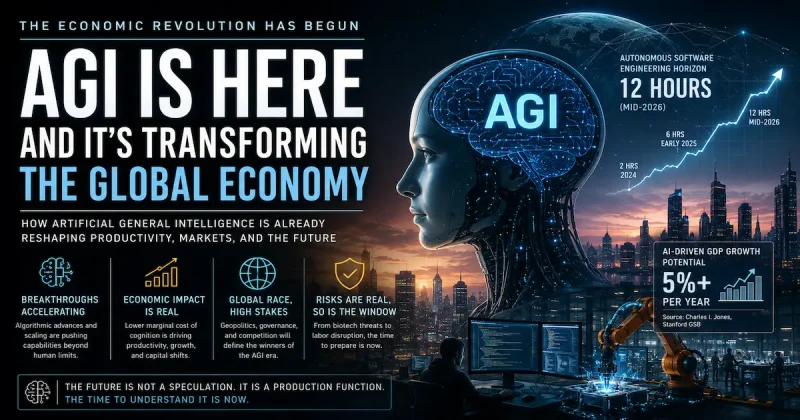

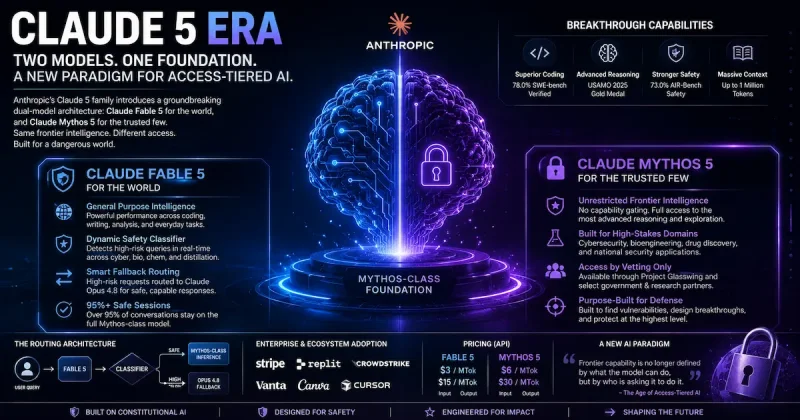
Comments
Leave a Comment
Your comment will appear after moderation.