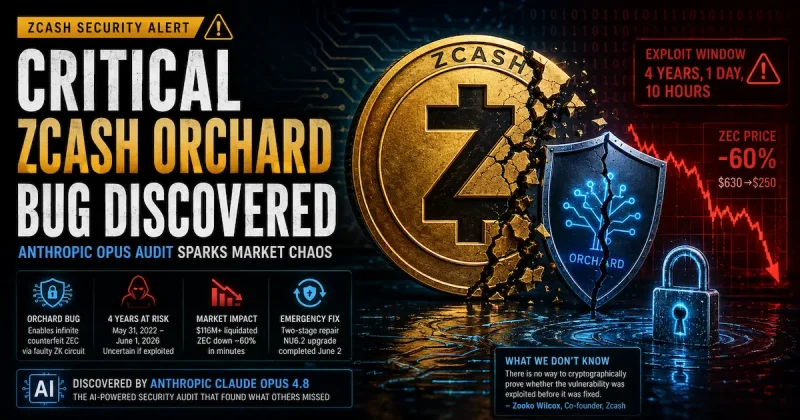
Zcash is a privacy-focused cryptocurrency which features an encrypted ledger using zero-knowledge proofs.
Launched in October 2016, Zcash was developed by cryptographers at Johns Hopkins University and MIT and derived its code from bitcoin. Zcash was one of the first large-scale implementations of zero-knowledge proofs outside of academia.
Zcash is modeled on bitcoin, sharing its proof-of-work consensus mechanism.
In 2016, Tom Robinson, co-founder of blockchain tracing firm Elliptic, told CNBC that Zcash appeared to have achieved a high level of anonymity.
Zcash supports two types of addresses: transparent addresses, which function similarly to bitcoin addresses with publicly visible transactions, and shielded addresses, which use zero-knowledge proofs to encrypt transaction data. Shielded transactions can be verified as valid without revealing the sender, recipient, or amount transferred. Users can transact between the two types, allowing funds to move between the transparent and shielded pools.
This optional privacy model is intended to preserve fungibility, allowing units of the currency to be treated equally regardless of their transaction history. Users also have the option to share private viewing keys, allowing designated third parties to see their transaction details for auditing purposes. A 2018 study found that while it is possible to use Zcash privately, the anonymity set of the shielded pool could be reduced through heuristics-based analysis of usage patterns. The analysis predates subsequent protocol upgrades to the shielded transaction system.
In 2022, journalist Andy Greenberg described Zcash's shielded transactions as "provably inaccessible" to surveillance and said he had not seen evidence that its anonymity could be compromised.